Theatre Is My Sport 2026 Capstone Study
The Theatre Department at Loyola develops thoughtful, creative, and versatile Theatre Artists through rigorous, hands-on training. The program emphasizes mentorship, collaboration, and real-world experience to prepare students to succeed as working artists in the professional world. There goals and aspirations are to Increase awareness of the department’s existence. Additionally, clearly explain what it does and where it is located and create innovative promotional material that gets more people to see the department’s performances.
Opportunity
A key challenge is increasing awareness of the Theatre Department - who they are, what they offer, and their campus presence. Despite a strong brand, limited promotional experimentation and visibility weaken their connection to the Loyola community. Student engagement is low, with little consistent presence outside major events. However, audience-focused campaigns at events like Homecoming could improve awareness and turnout.
This primarily affects Theatre Loyola students and staff, as low attendance at productions can lead to discouragement after significant time and effort invested.
User & Audience Insights
The Theatre Department relies on limited marketing beyond social media, posters, and yard signs, which leaves many students disengaged or unaware of its presence. However, strong turnout at student-centered events shows that targeted, incentive-driven promotion can be effective. Events like Mass & Pancakes, Sneaux, and Homecoming present key opportunities for theatre branding, interactive promotion, and merchandise to increase visibility and strengthen student engagement.
Proposed Solution
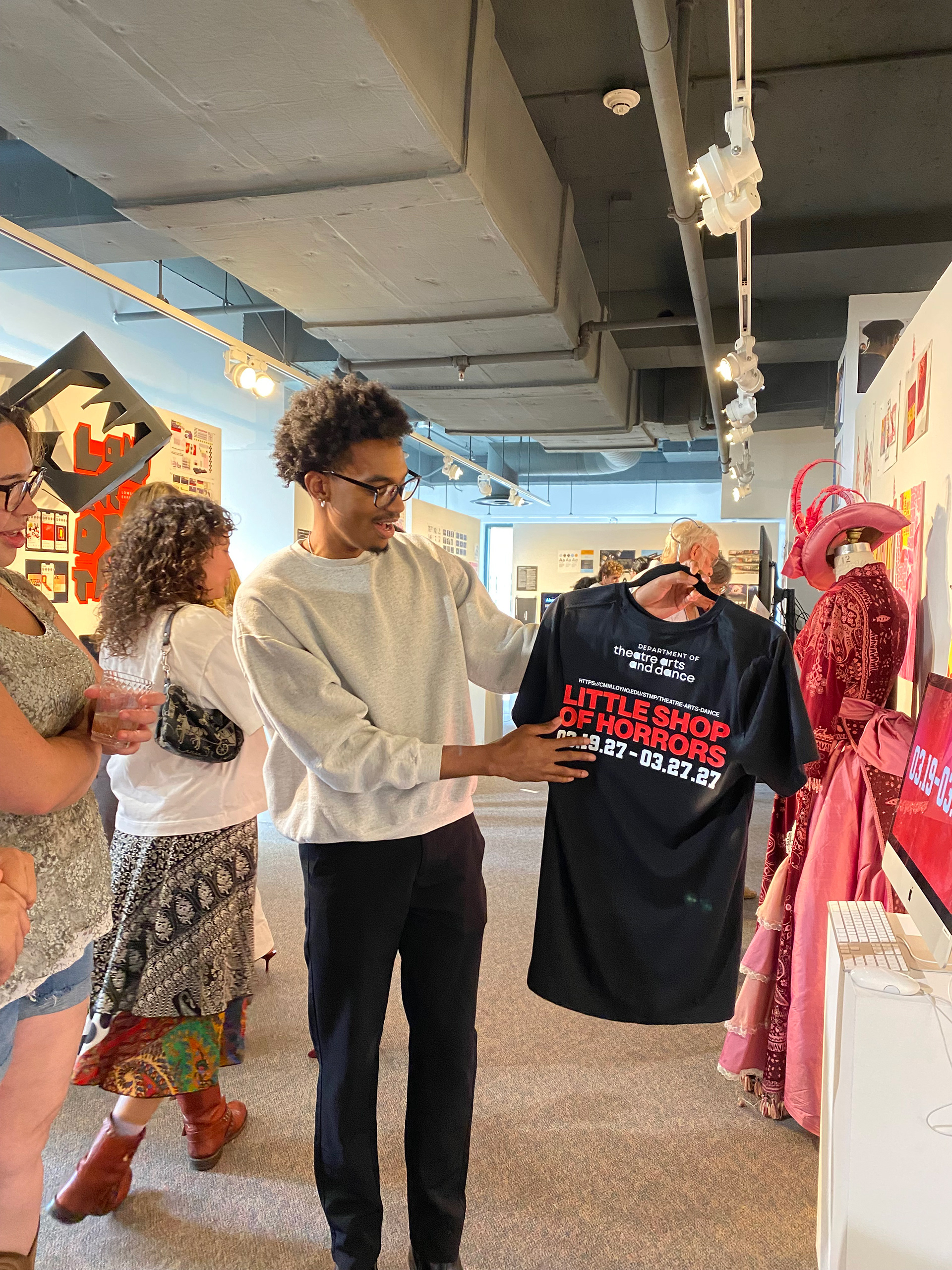
I proposed to design a promotional motion interior projection with theatre play-themed merchandise, such as T-shirts and other experimental promotional items, that is being showcased during Loyola’s Homecoming Sports Event in 2027. This experience would be showcased during halftime of the basketball (or any sport in the Loyola Sports Complex) Student vs. Faculty game.
This approach focuses on creating awareness and excitement rather than selling merchandise. During the Homecoming game, the theater department would promote their upcoming play, Little Shop of Horrors, with branded materials and a small teaser for the audience. This would energize the crowd while introducing the production in a way that connects naturally to the event. The target audience are current Loyola students who supports and attends the Loyola community events such as Homecoming.
Design Approach : Sporty + Energetic + Student Culture. The branding is a mix of minimalism and organic pop chaos which illustrates a soft grudge, un-clean, straight to the point approach. This highlighted the sports culture fashion world where it displayed clarity, unorthodox textures, and representation. It is not classy, formal, and/or polished.
Key Features
Clear Promotional Messaging: The messaging promotes the theater’s upcoming production while making it easier for those unfamiliar with plays to connect with the theater. By aligning the play with the energy of Homecoming sports, the promotion links the game experience to the theater department and encourages attendees to see the play.
Thoughtful Audience Experience: The audience experience feels fresh and engaging, with the design featured during halftime to build excitement. It highlights the production while reaching people who don’t usually engage with the Theatre Department.
Everlasting Brand Recognition: Since halftime already plays a major role in engaging the crowd, additional materials like merchandise can further promote the play and future productions. By wearing the merchandise, the audience not only represents the play but also the Theatre Department’s creative brand and culture.
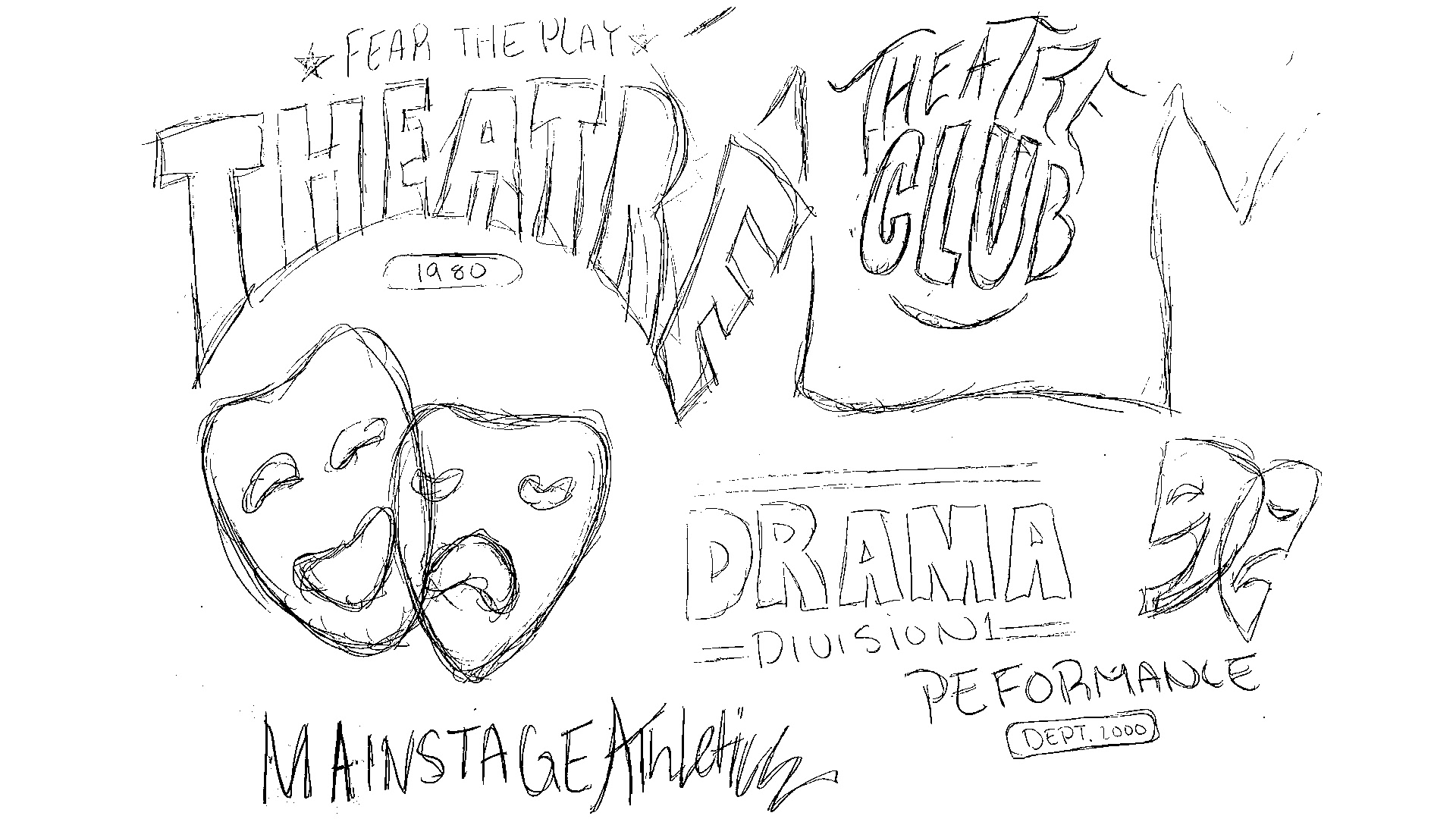
Concept 01: Creating theatre swag like T-shirts and other merchandise could experiment with blending sports-inspired messaging, using taglines such as “Read More Plays” or “Performance Dept.” Aimed at young to middle-aged adults, the goal is to strengthen identity, build audience connection, and reinforce the theatre as a vibrant creative hub.
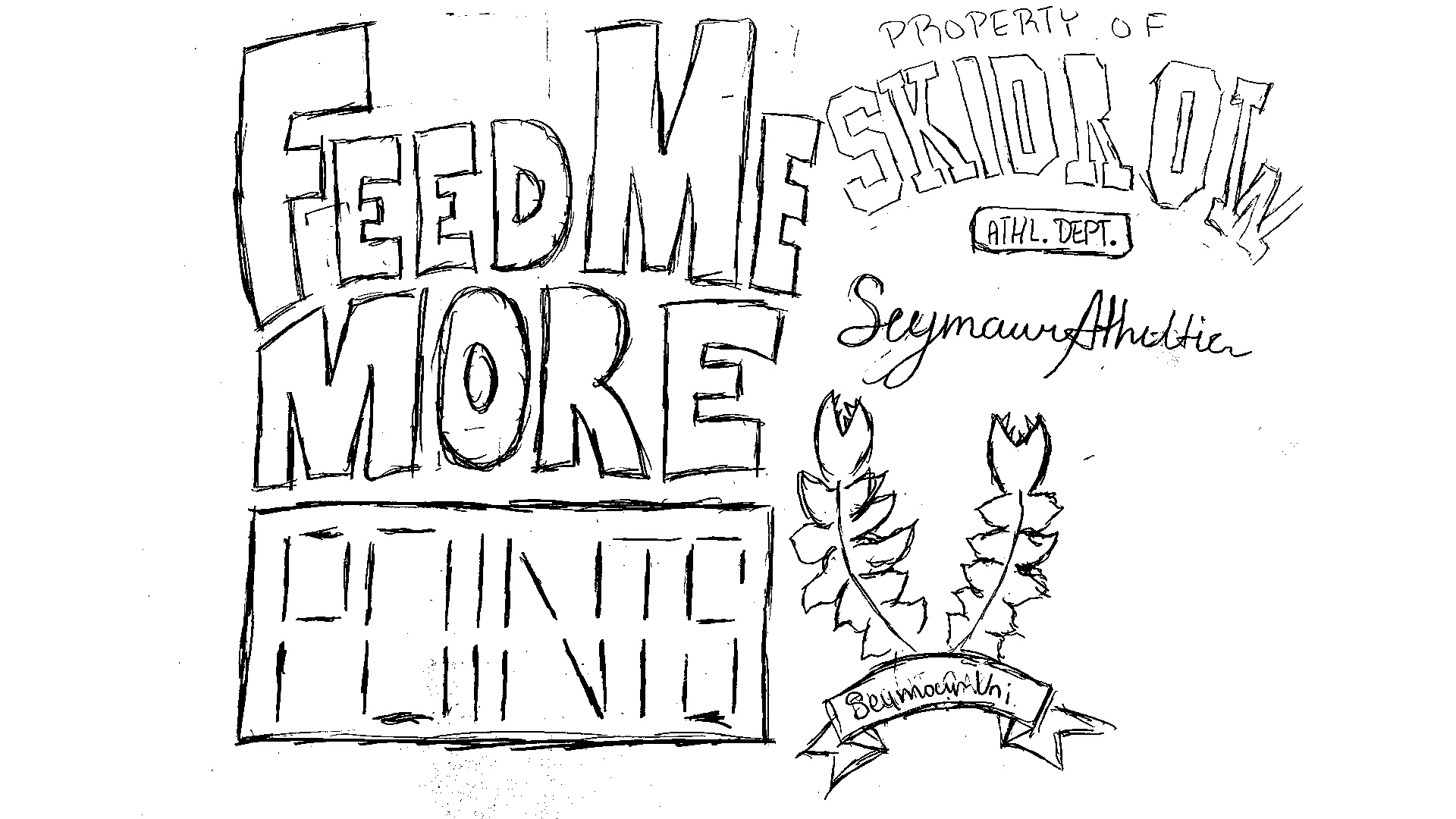
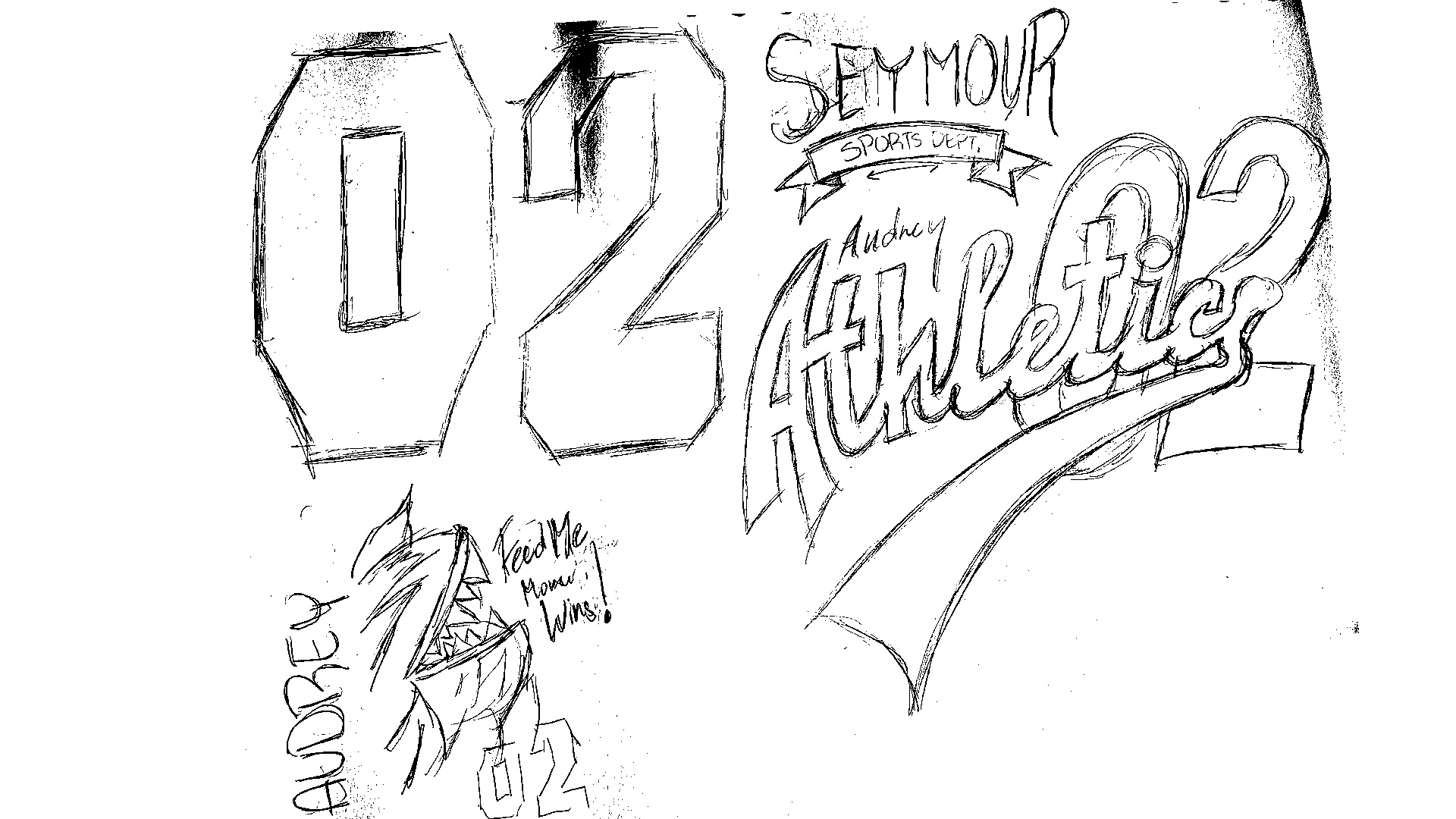
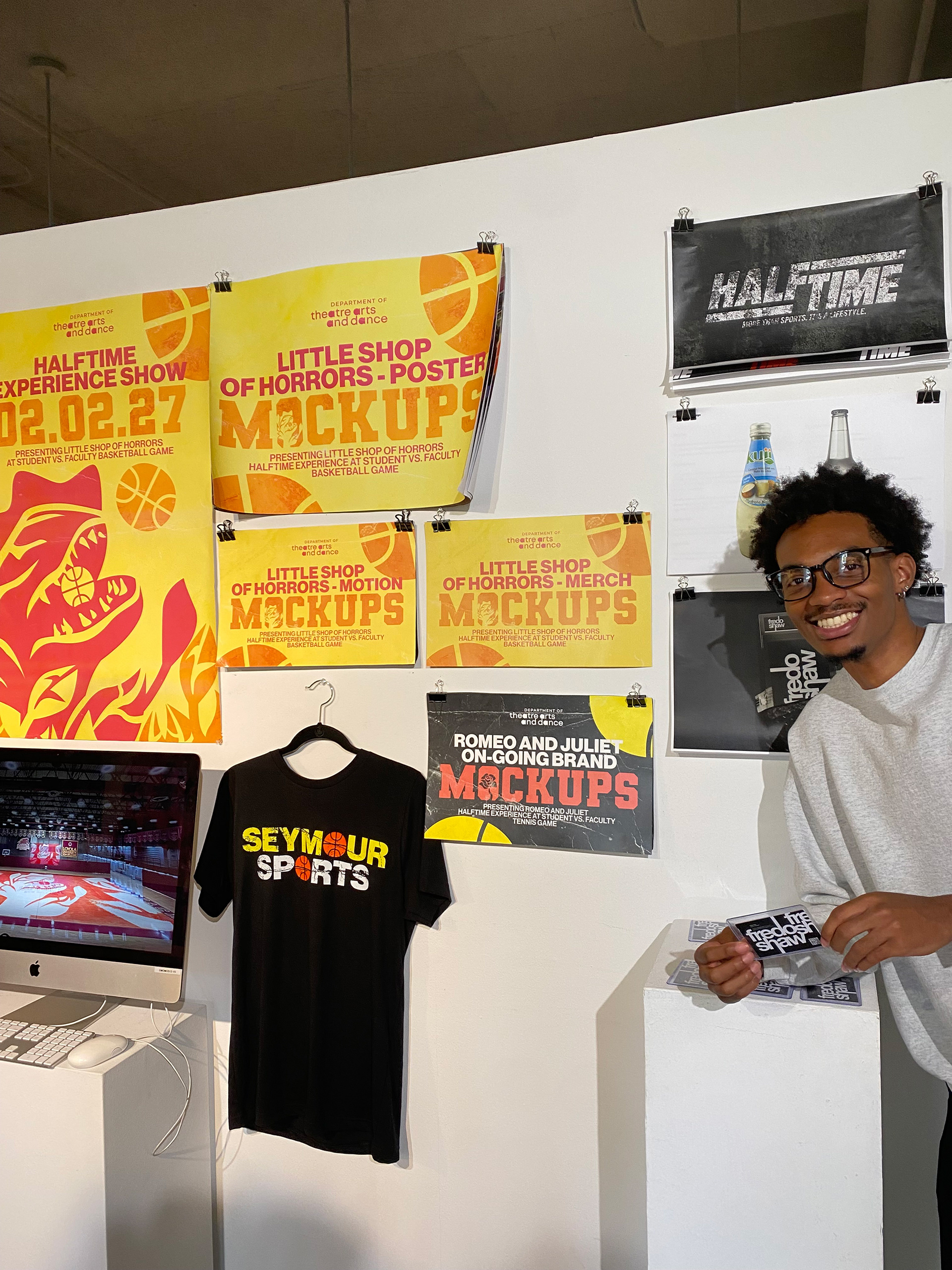
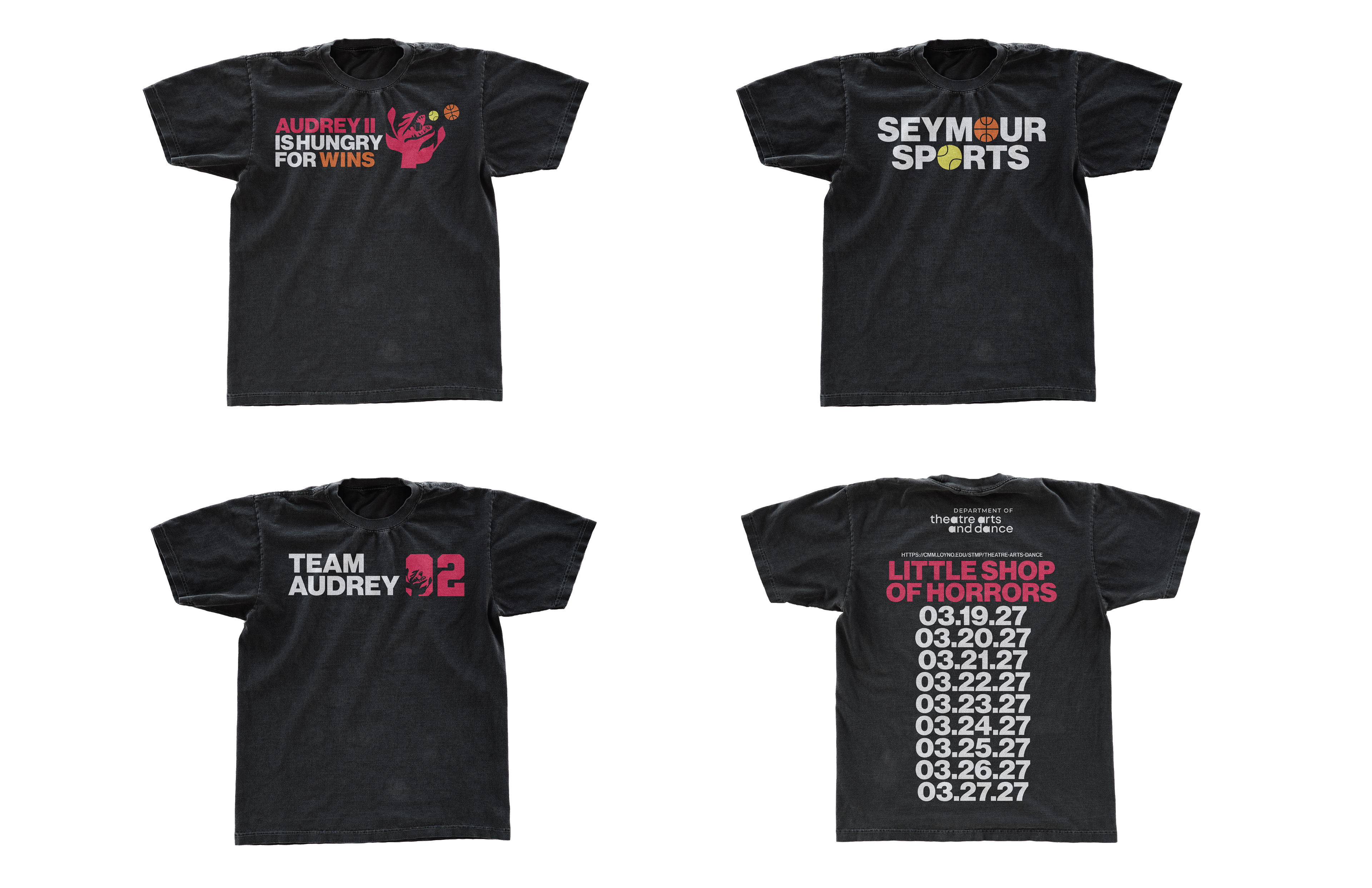
Concept 02: Designing a promotional interior projection featuring theatre-themed merchandise like T-shirts and other experimental items, with messaging centered on Little Shop of Horrors using taglines based on characters, locations, and popular moments from the play. For instance, Audrey 02 (The plant), Seymour and Skid Row (Little Shop of Horrors locations), etc.
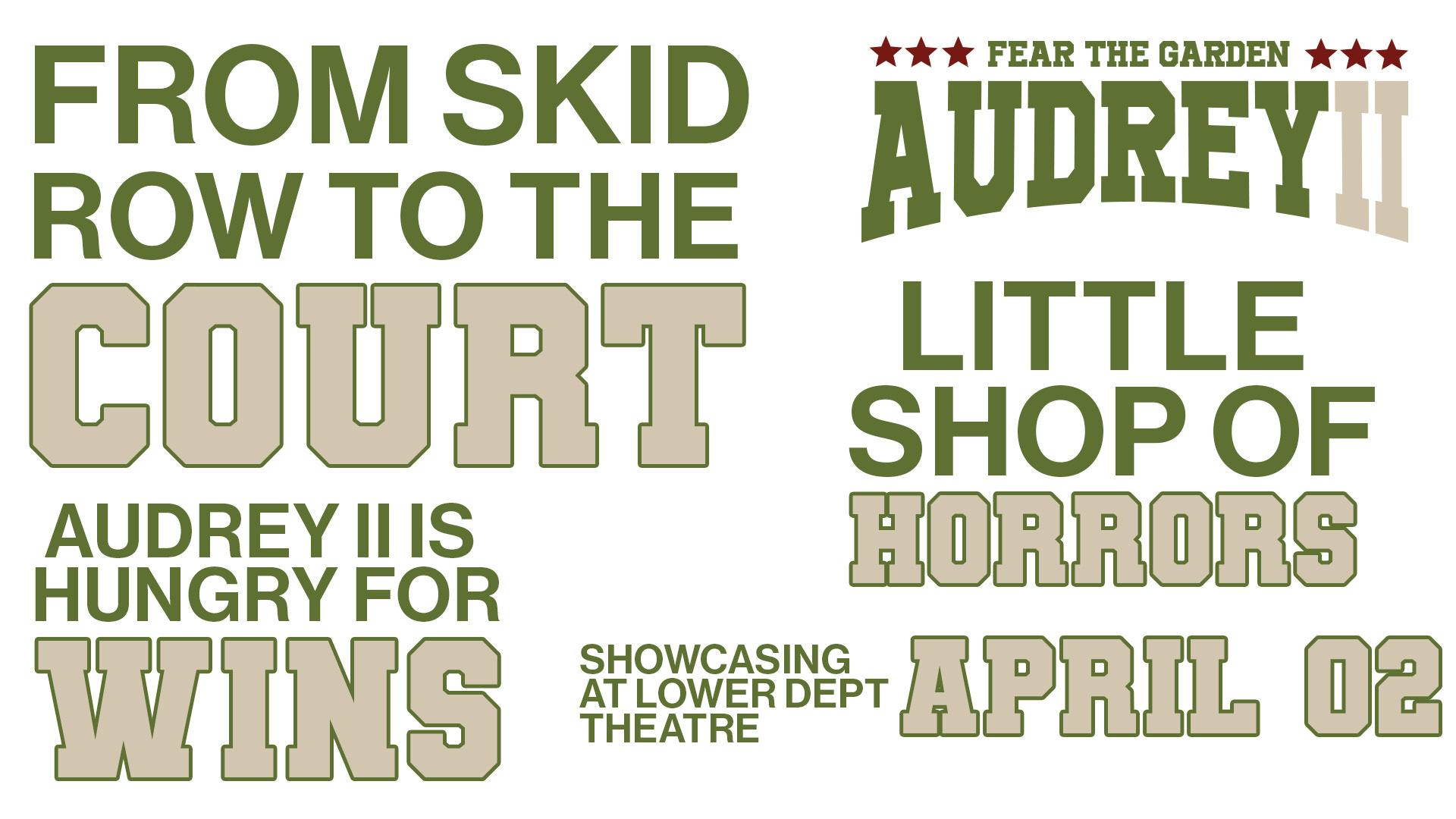
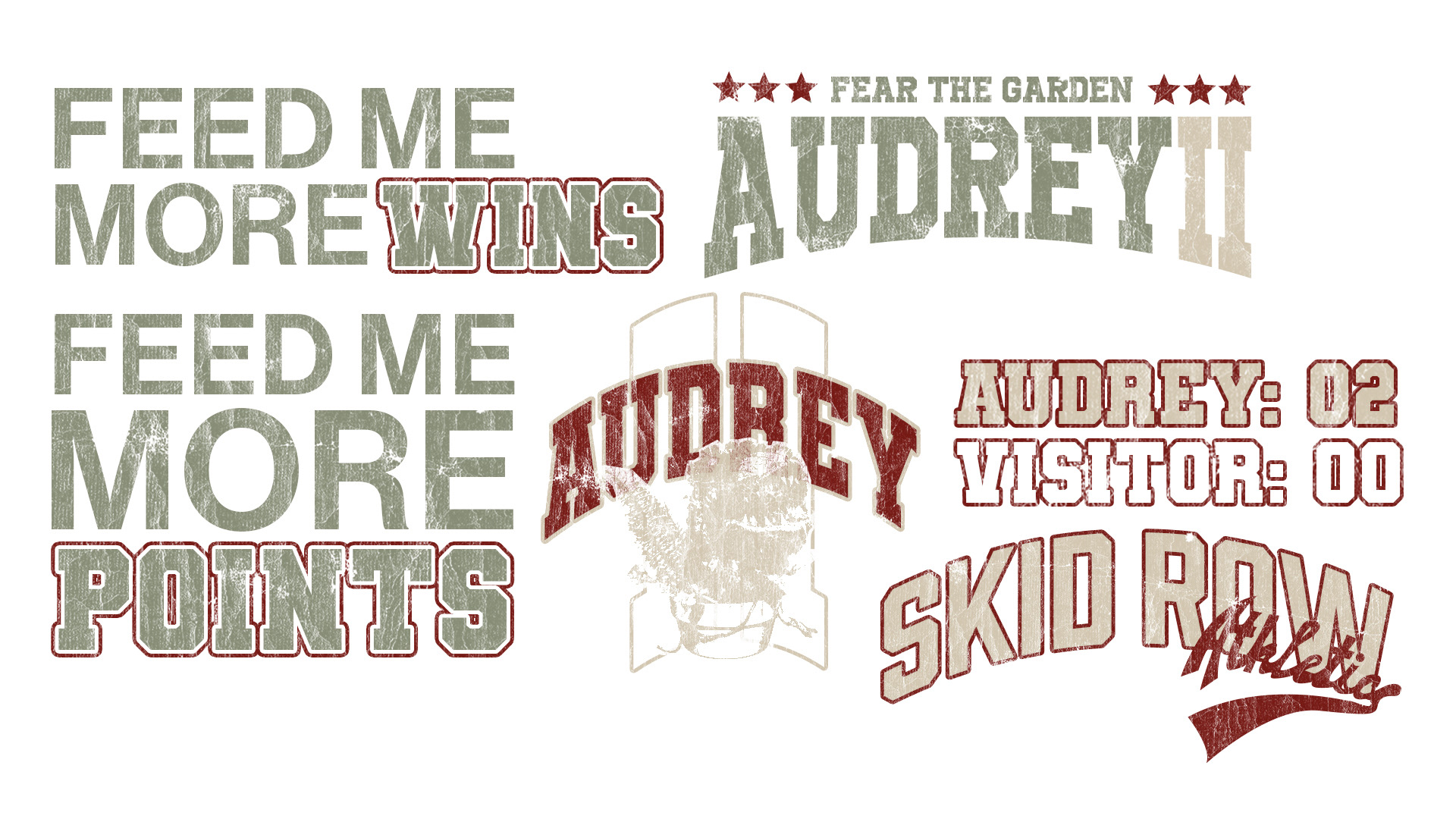
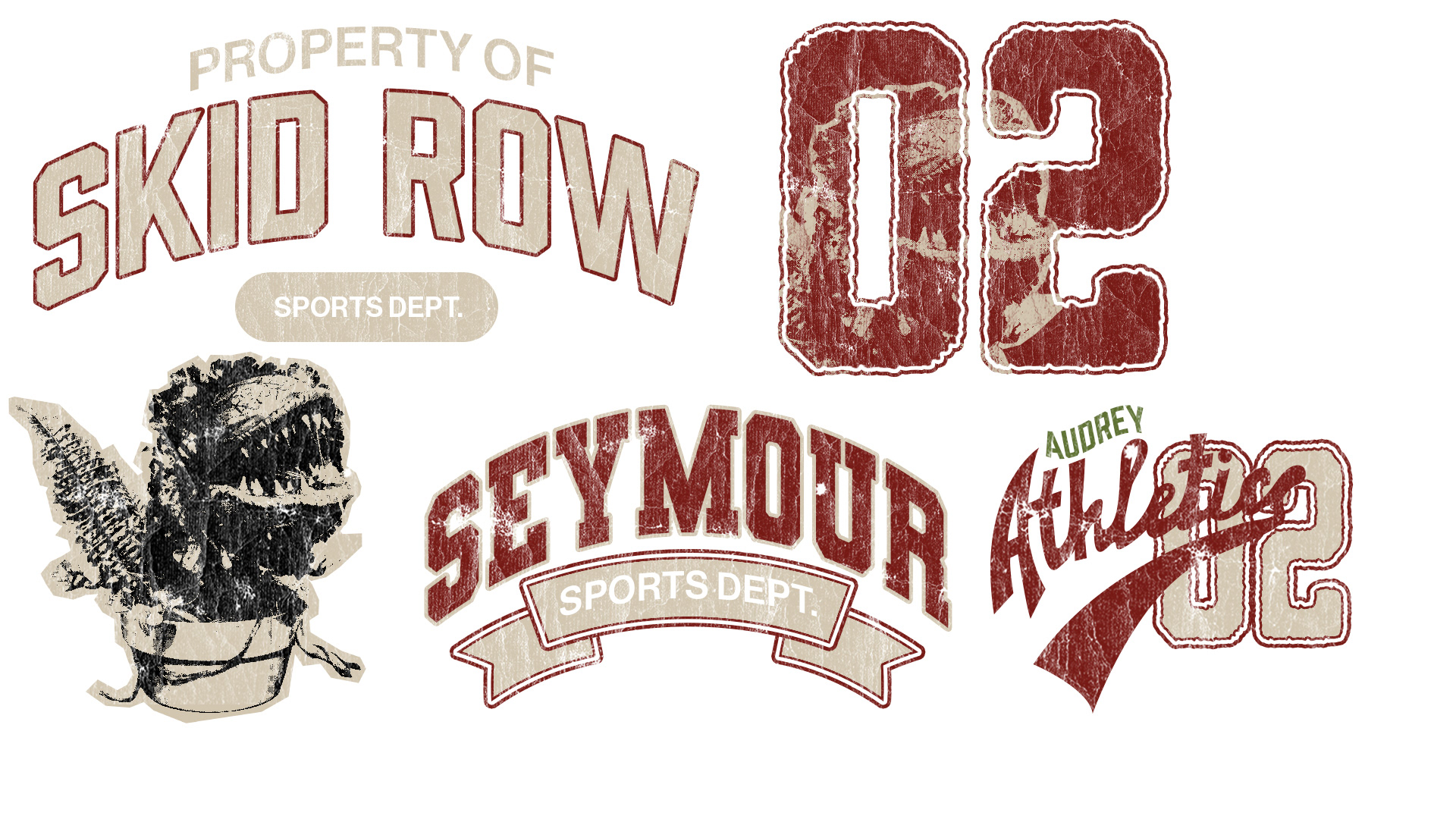
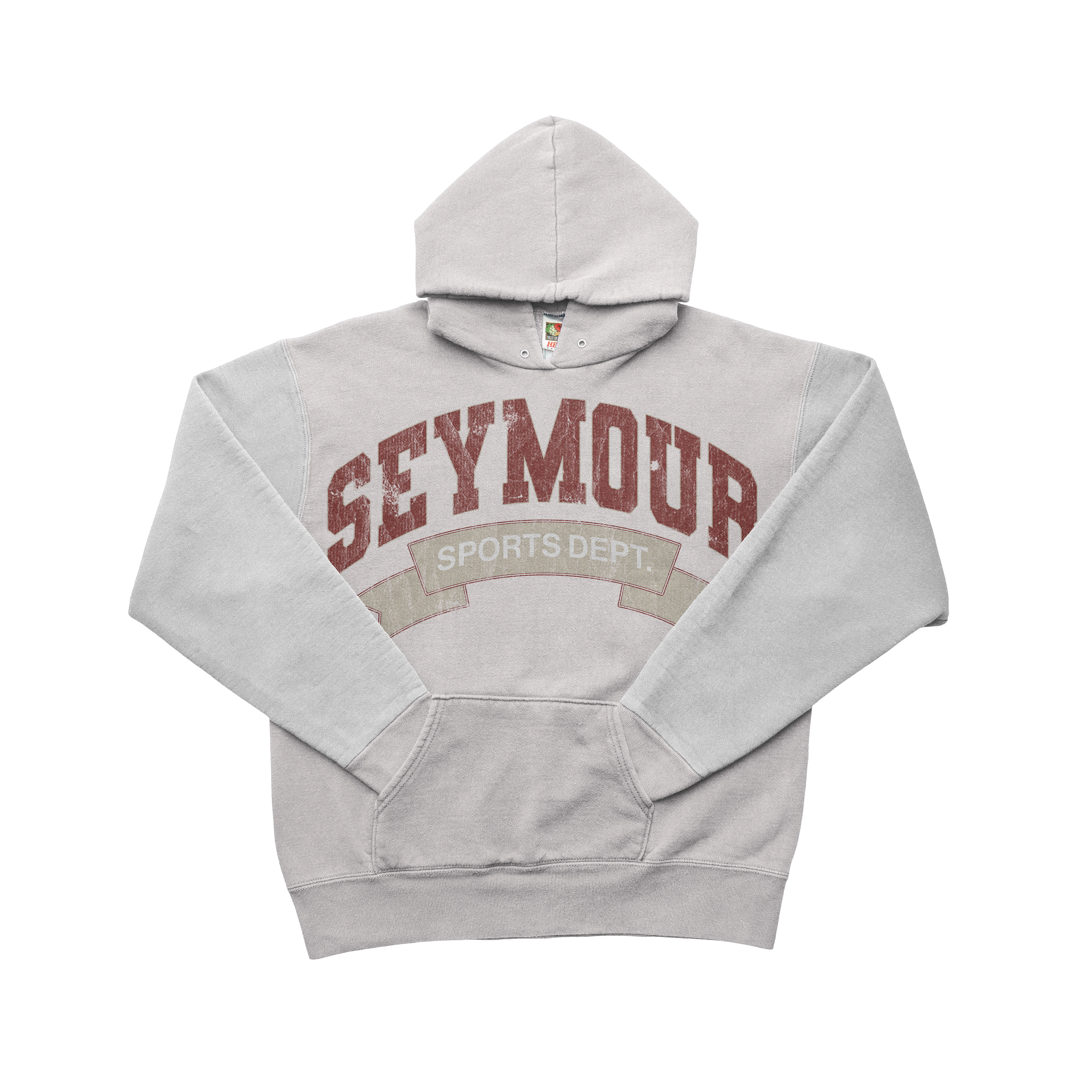
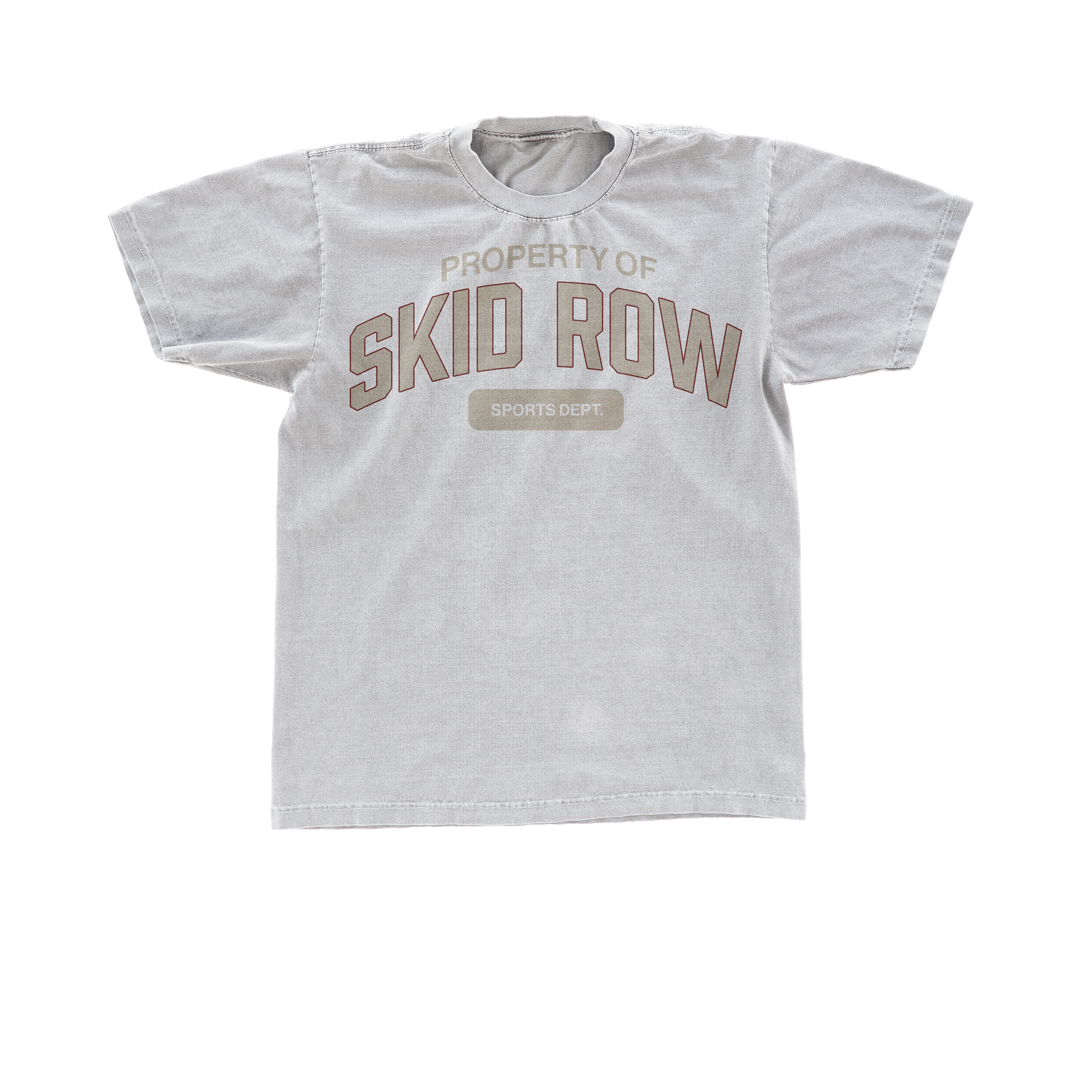
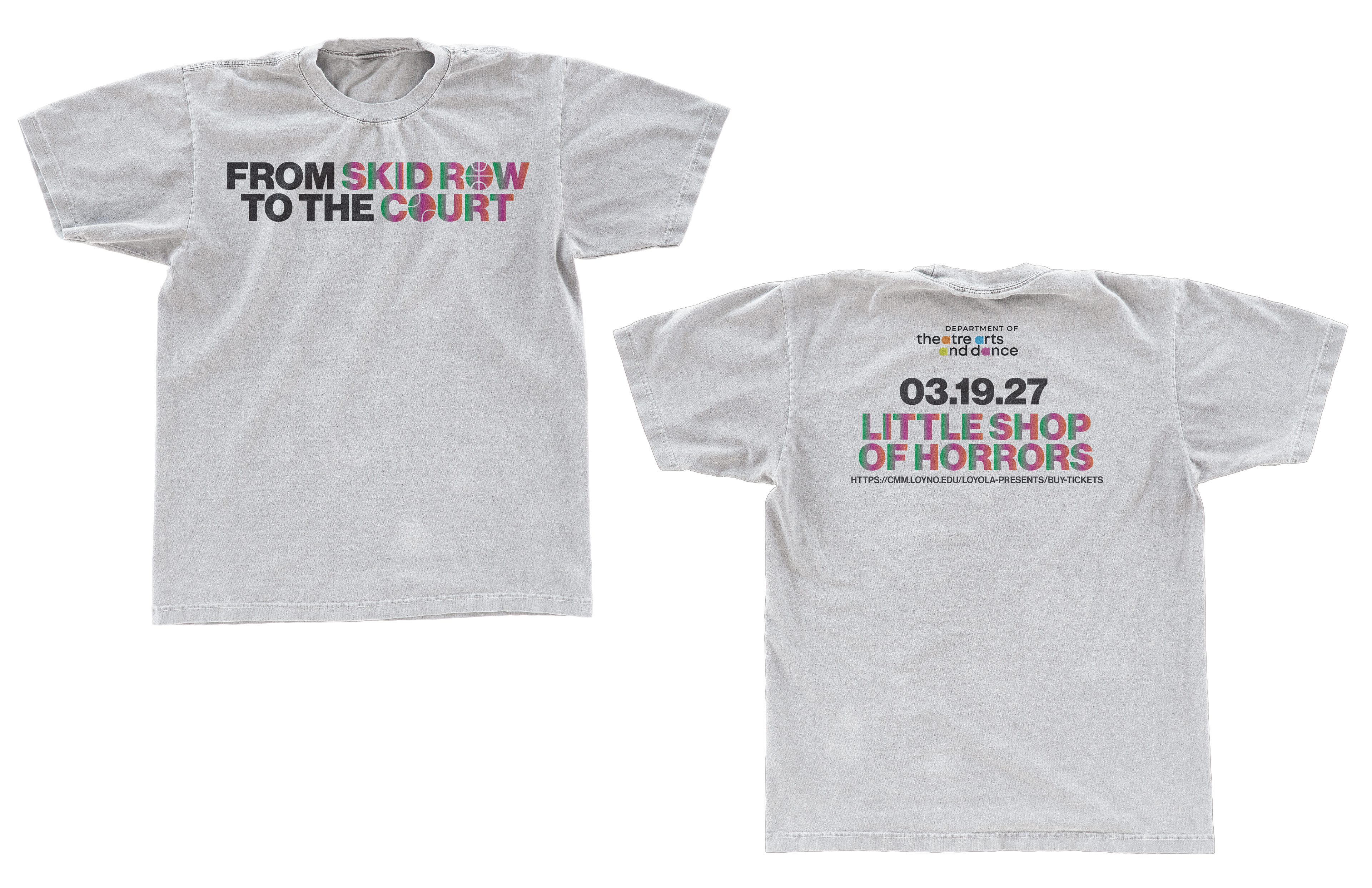
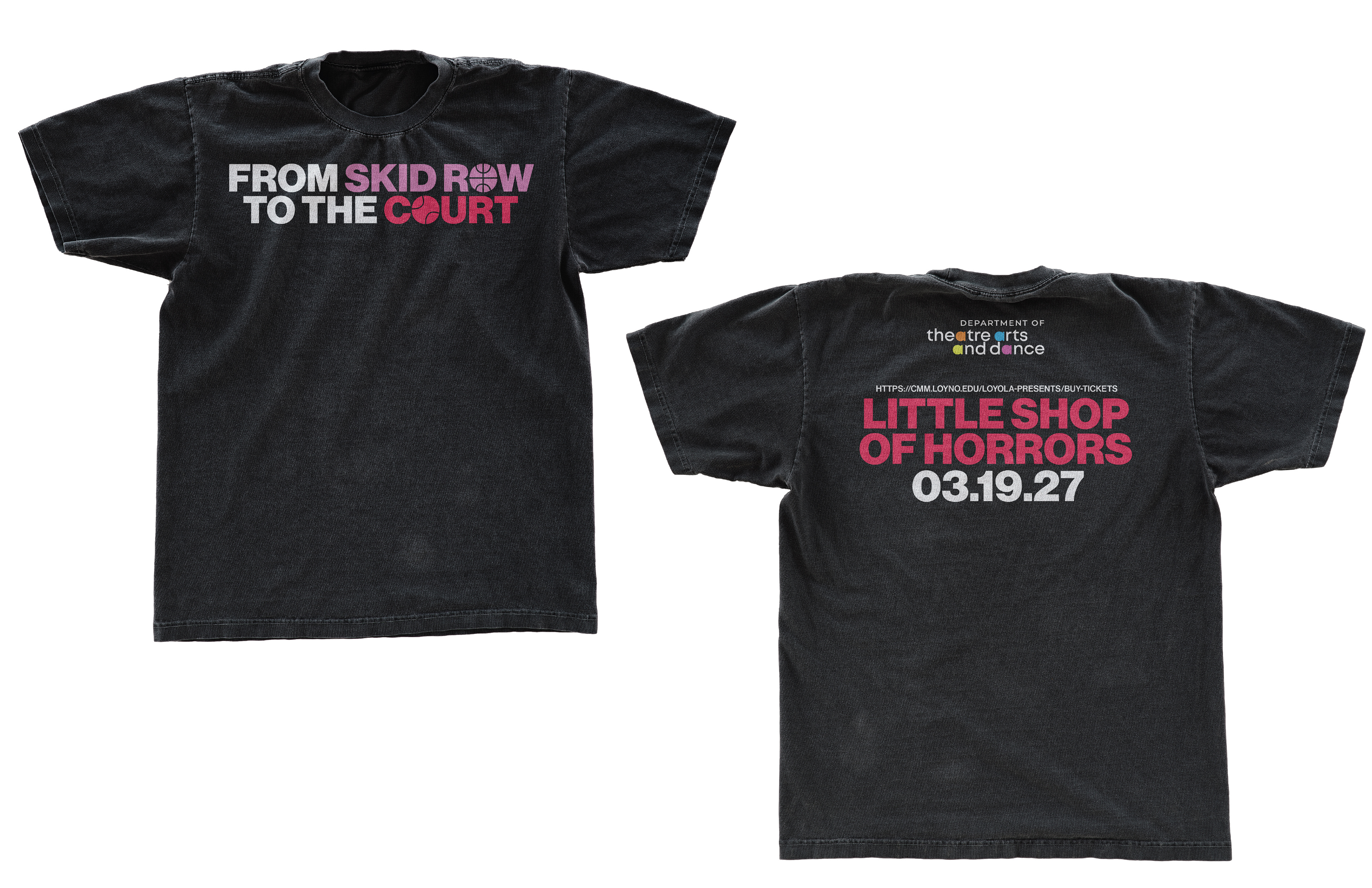
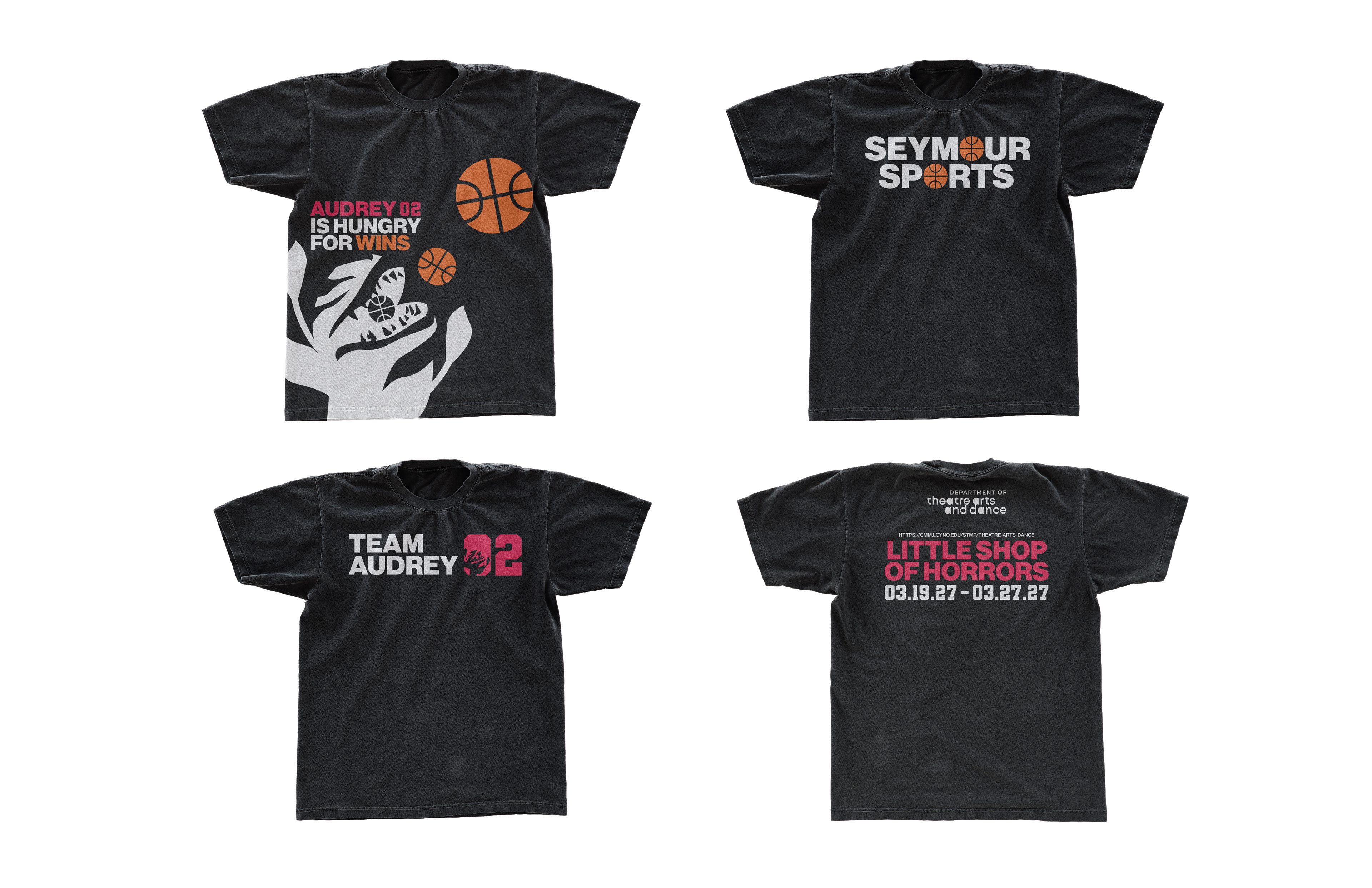
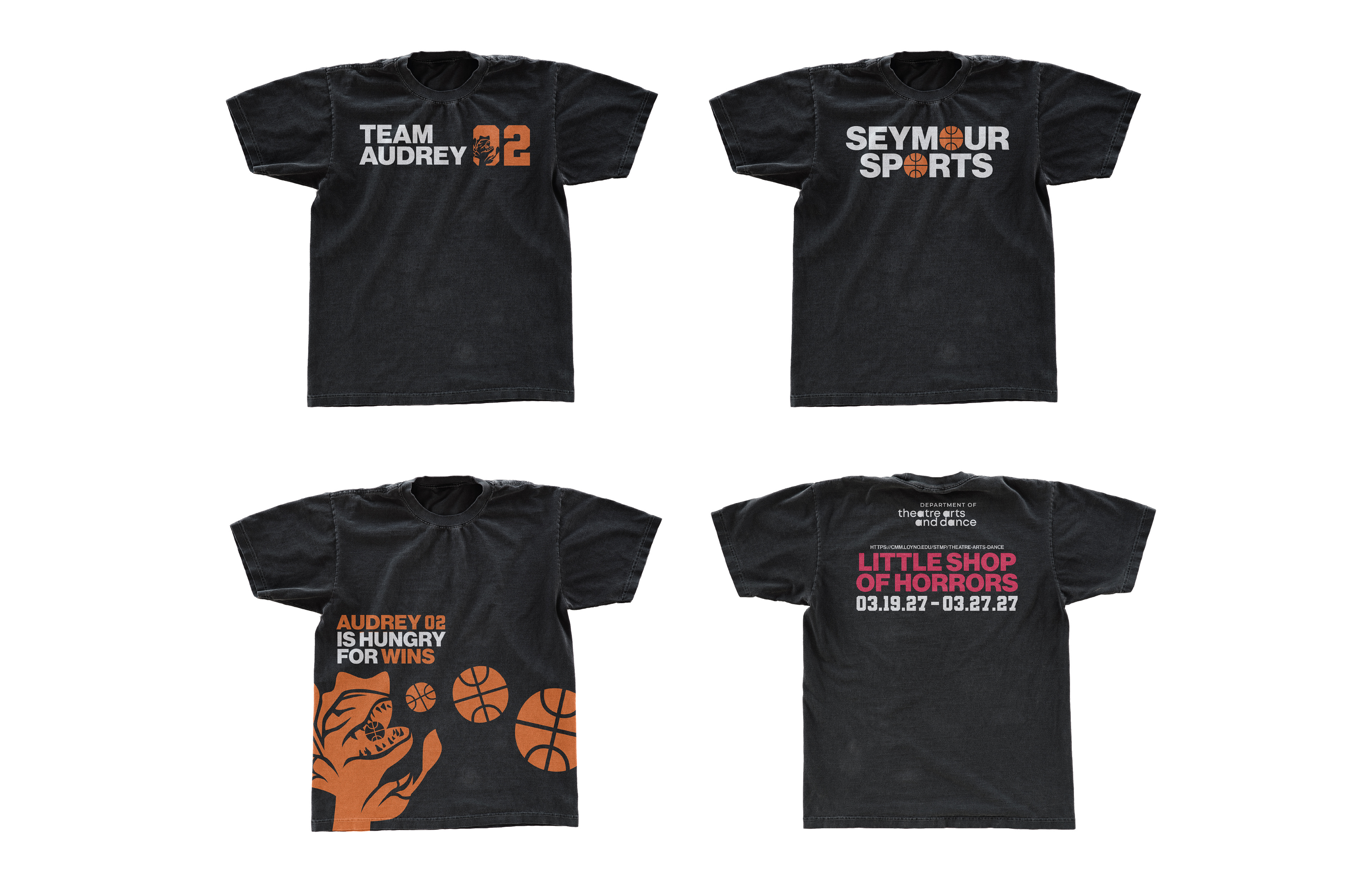
Low-Fidelity Process: This production stage is setting up the design language, experimenting within a variety of color palettes, and solidifying the grudge textures implemented with in the merch, poster, and light motion assets.
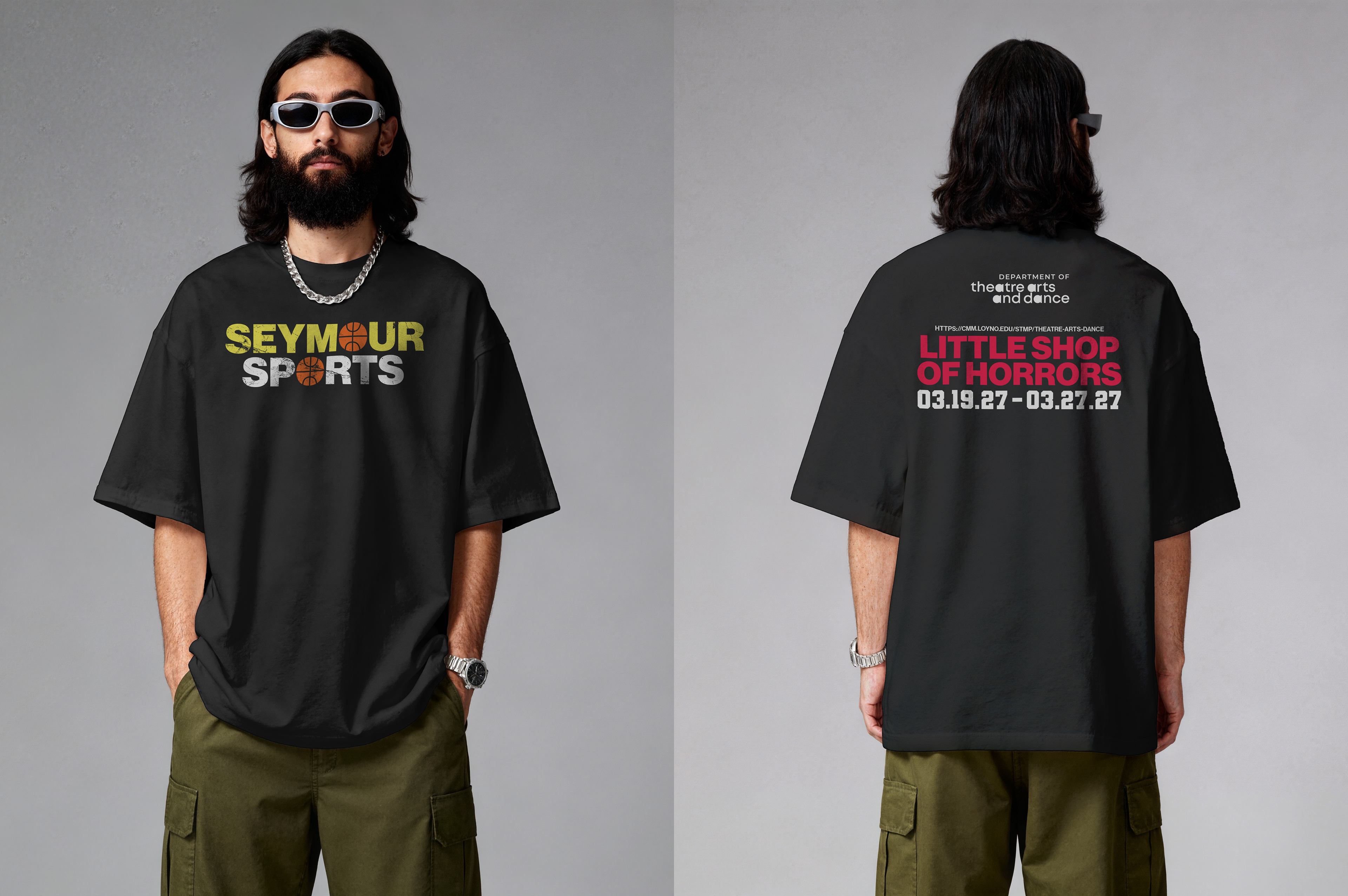
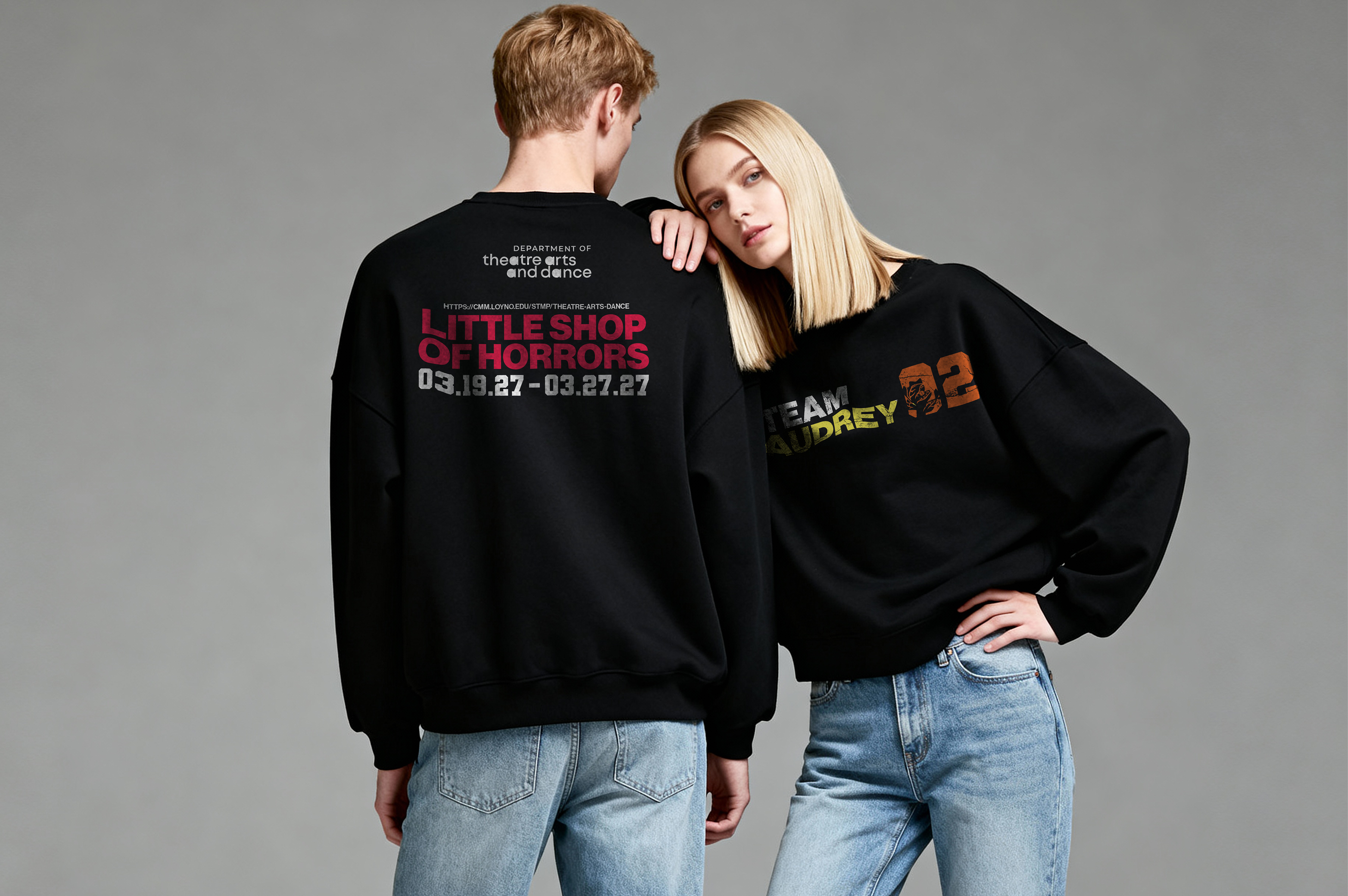

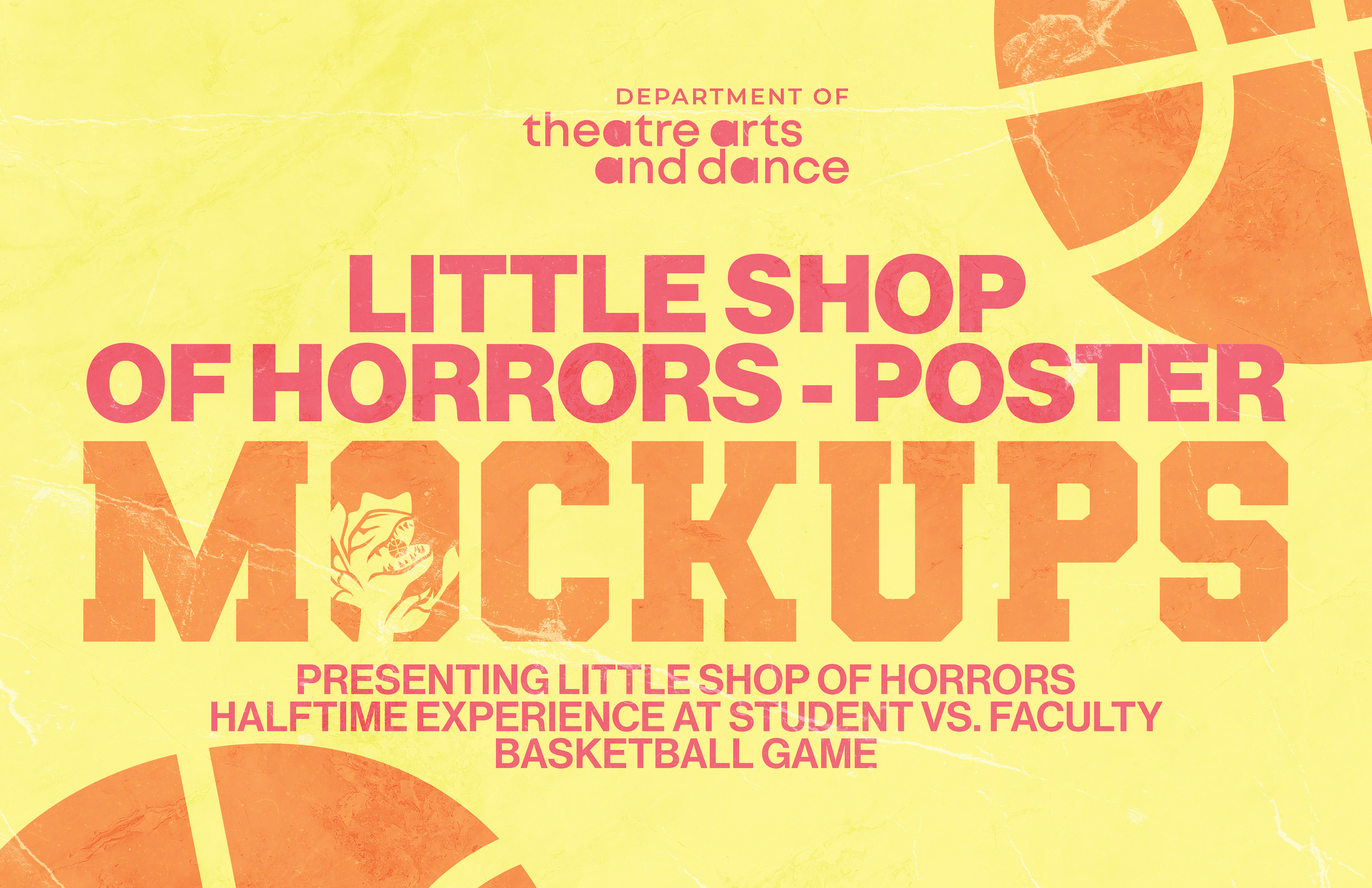
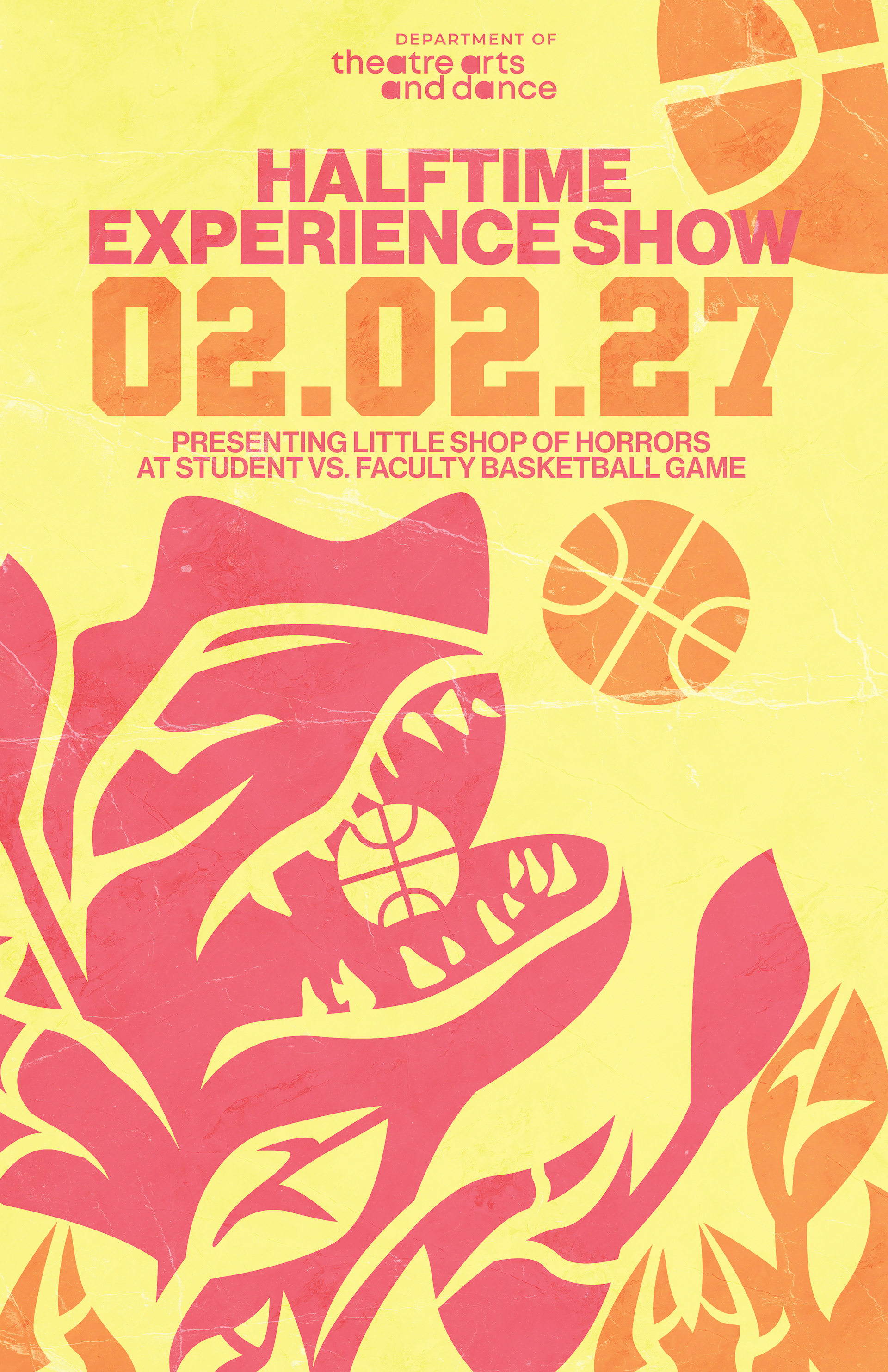
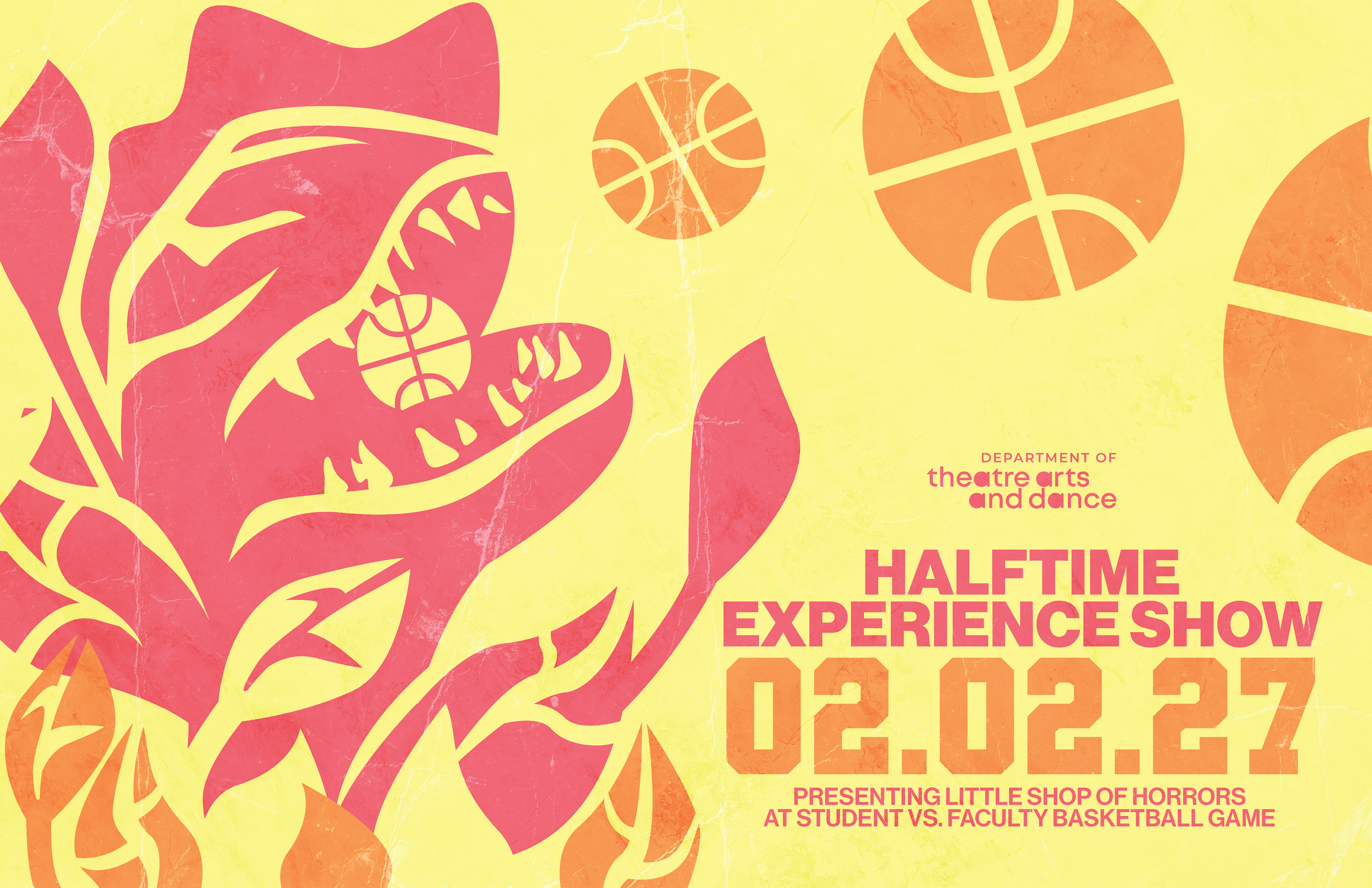
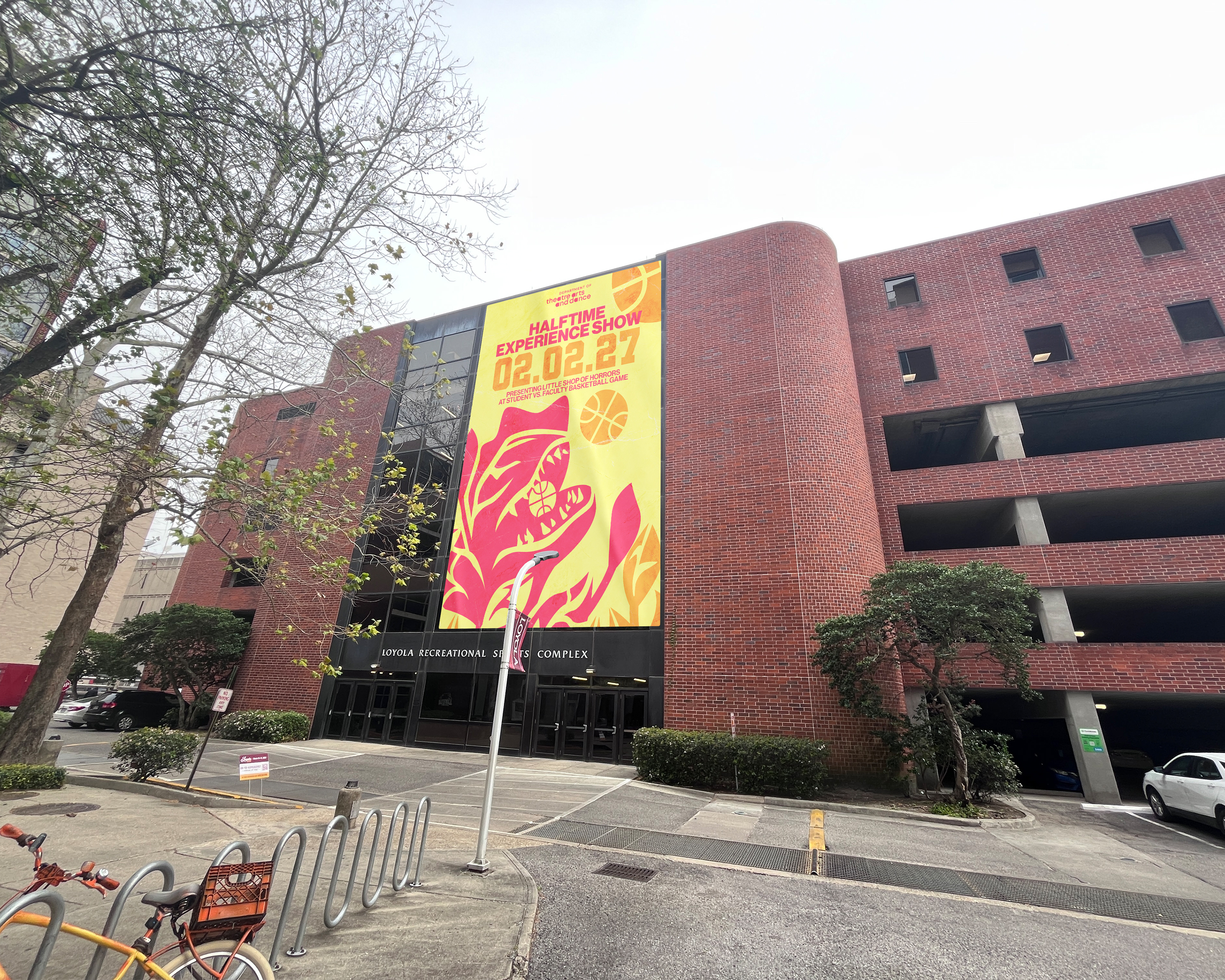
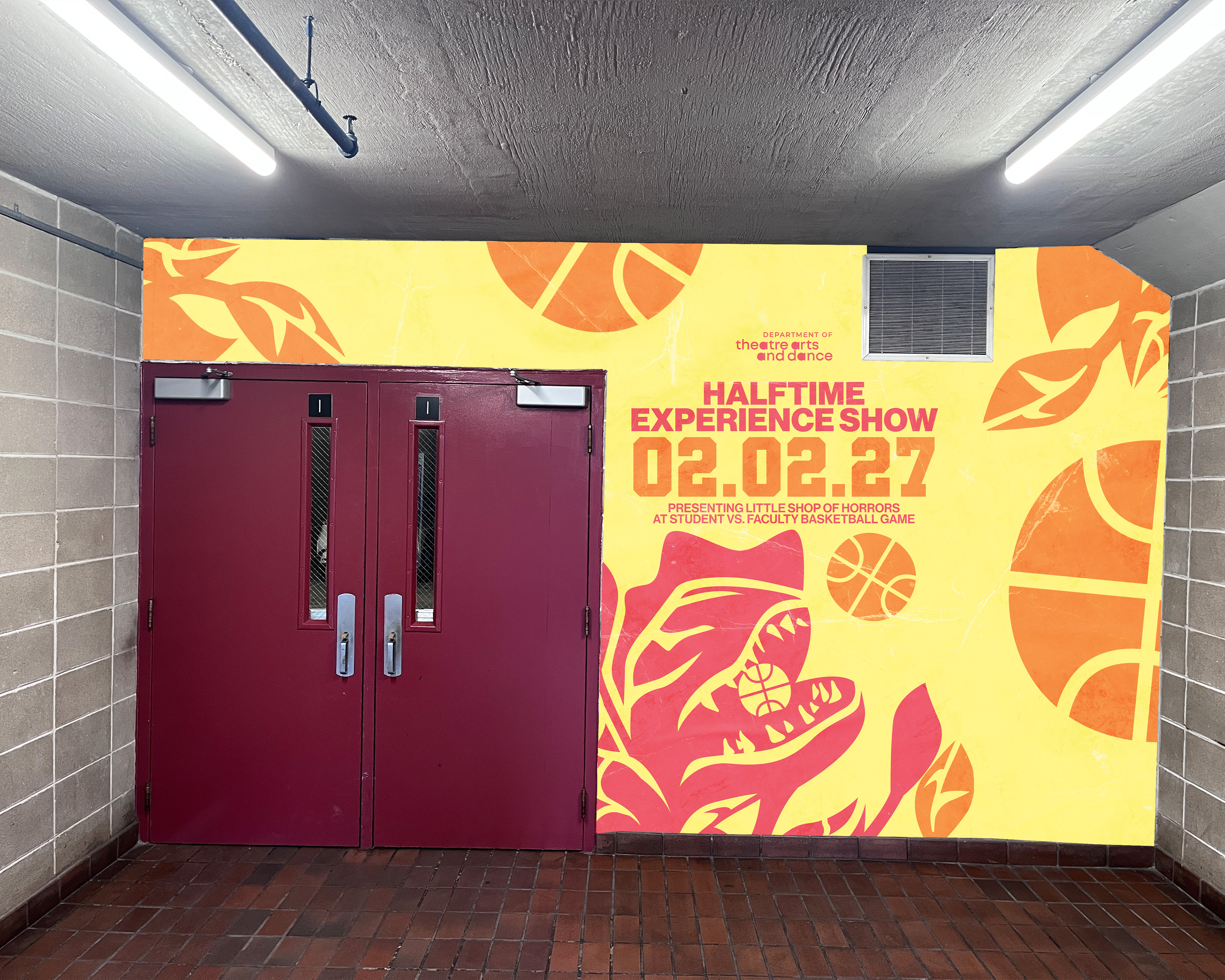
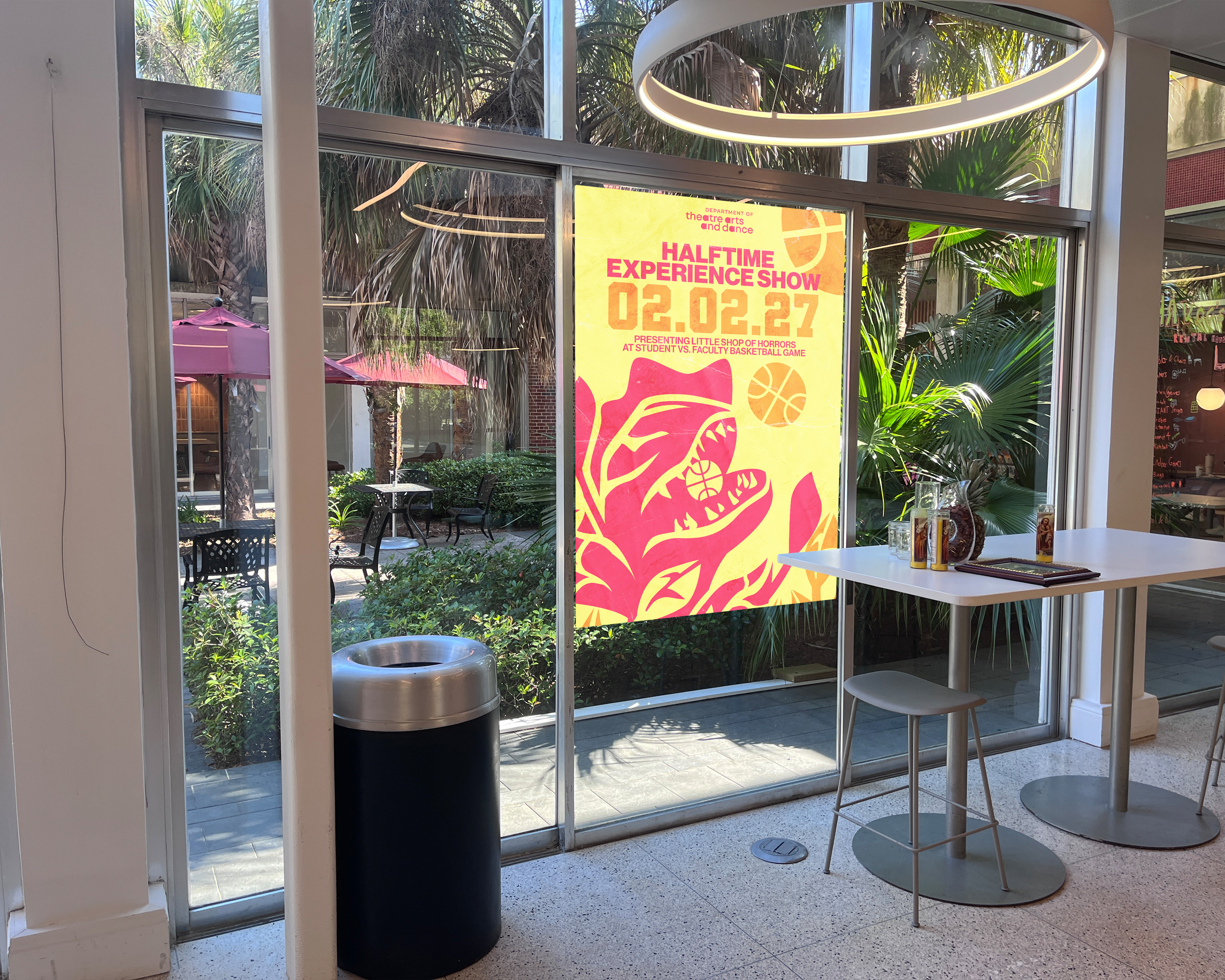
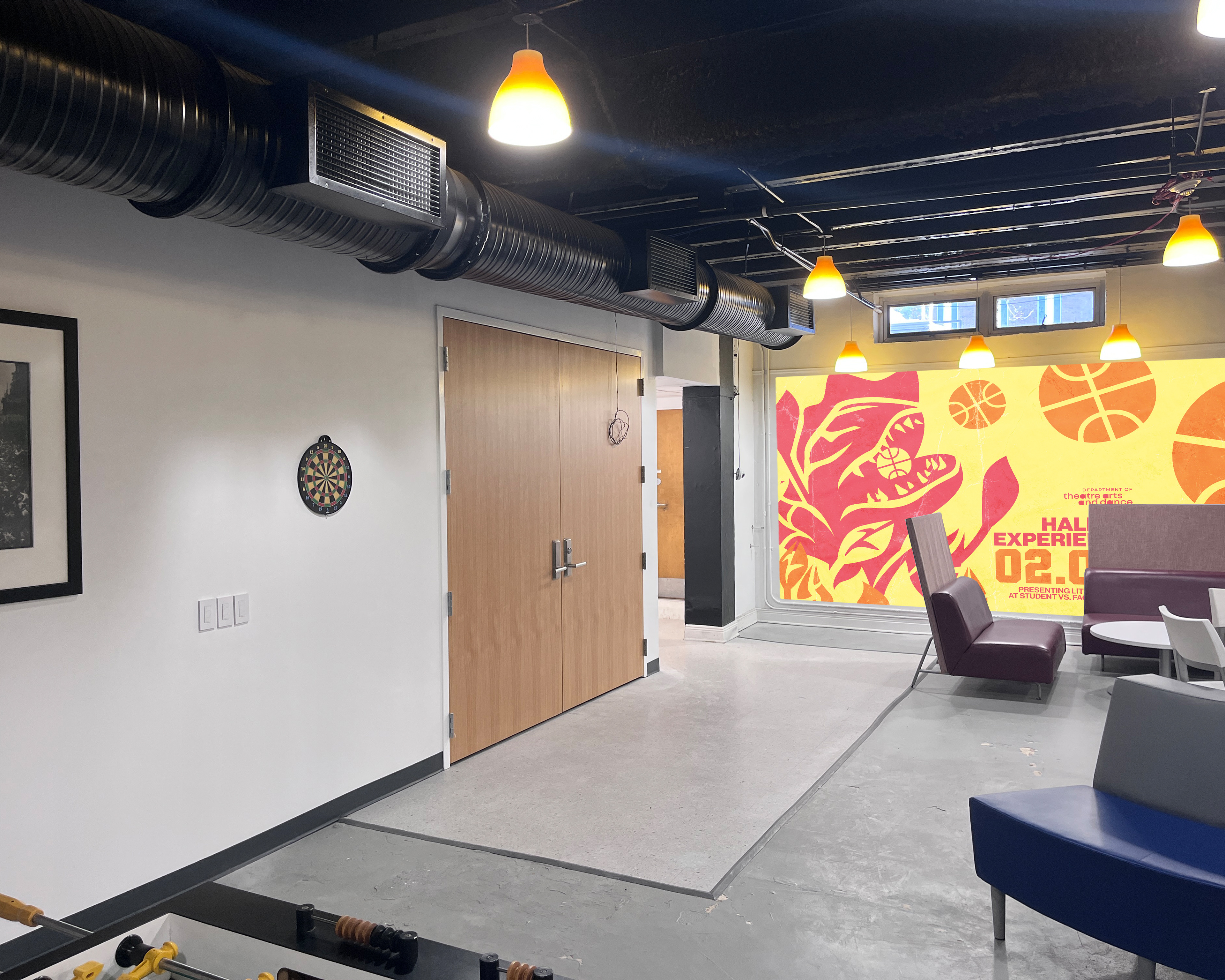
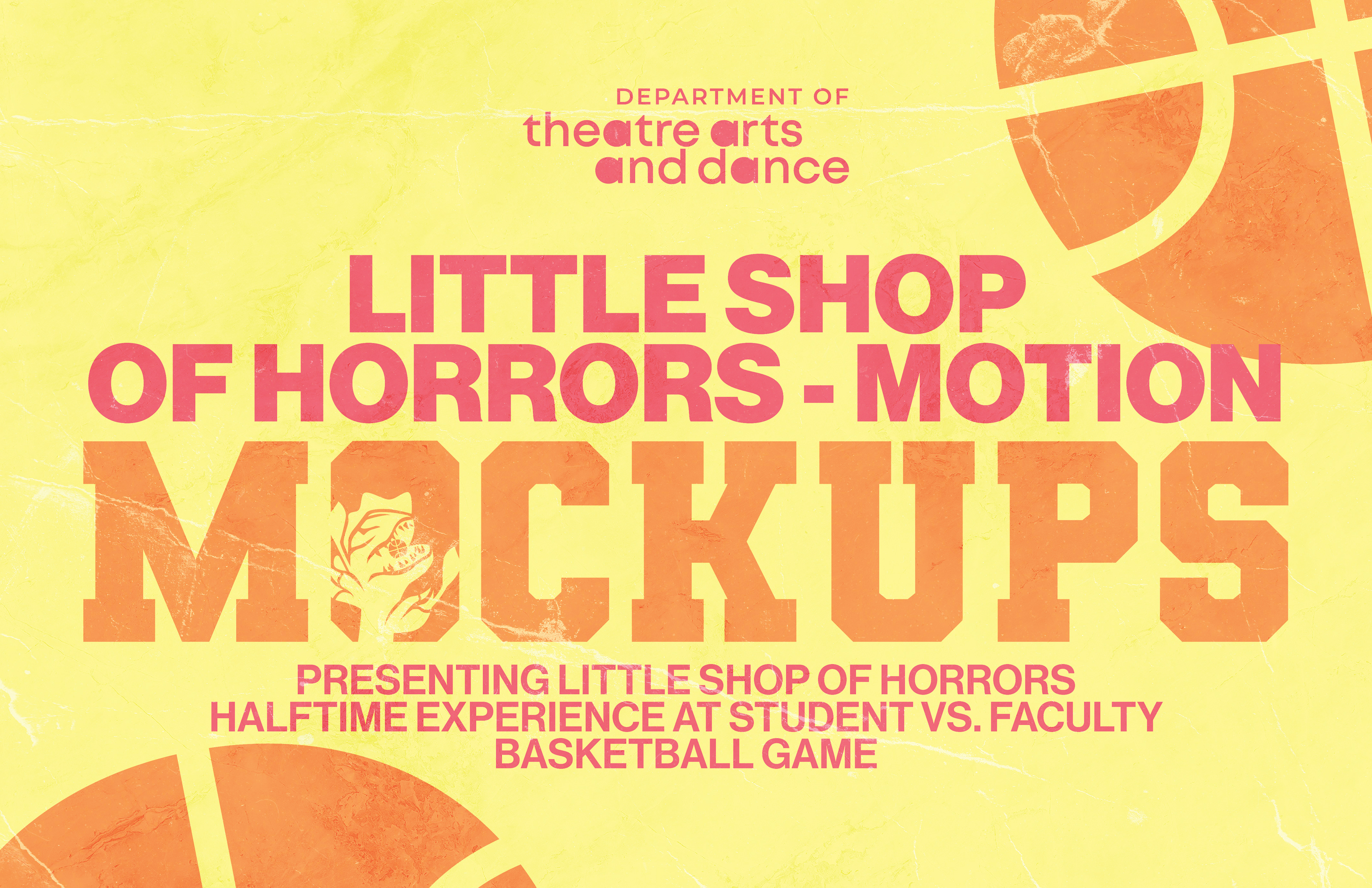
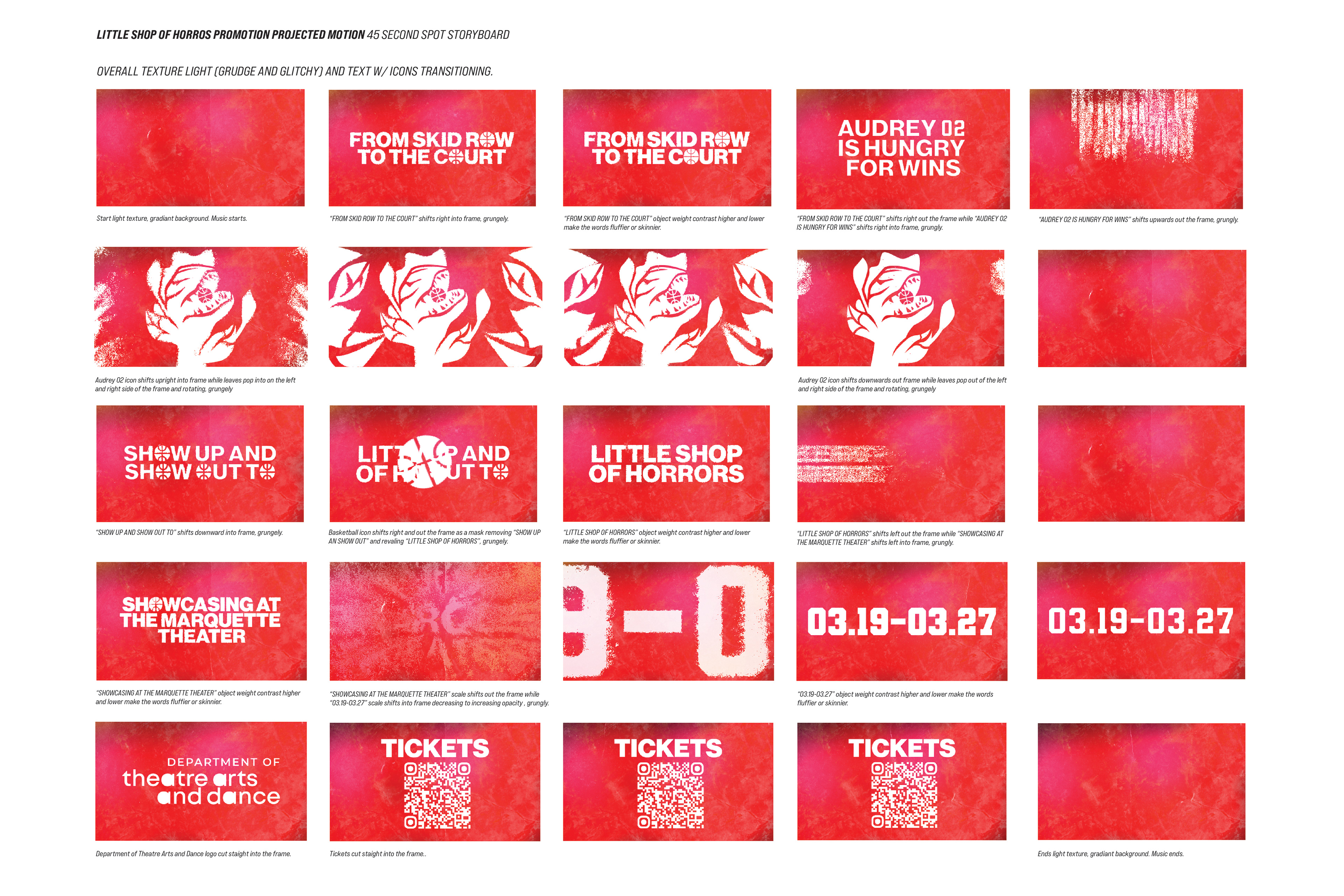
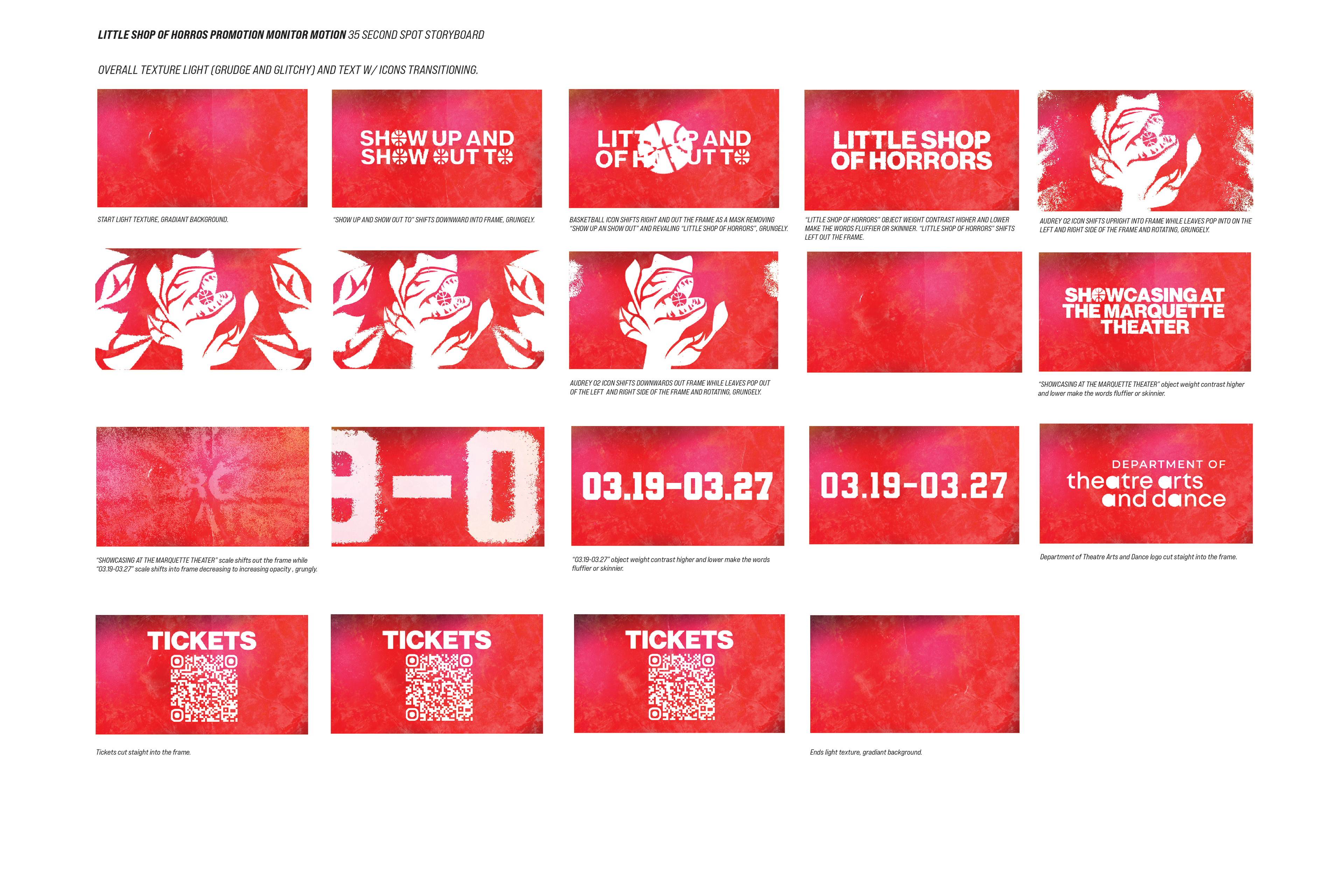
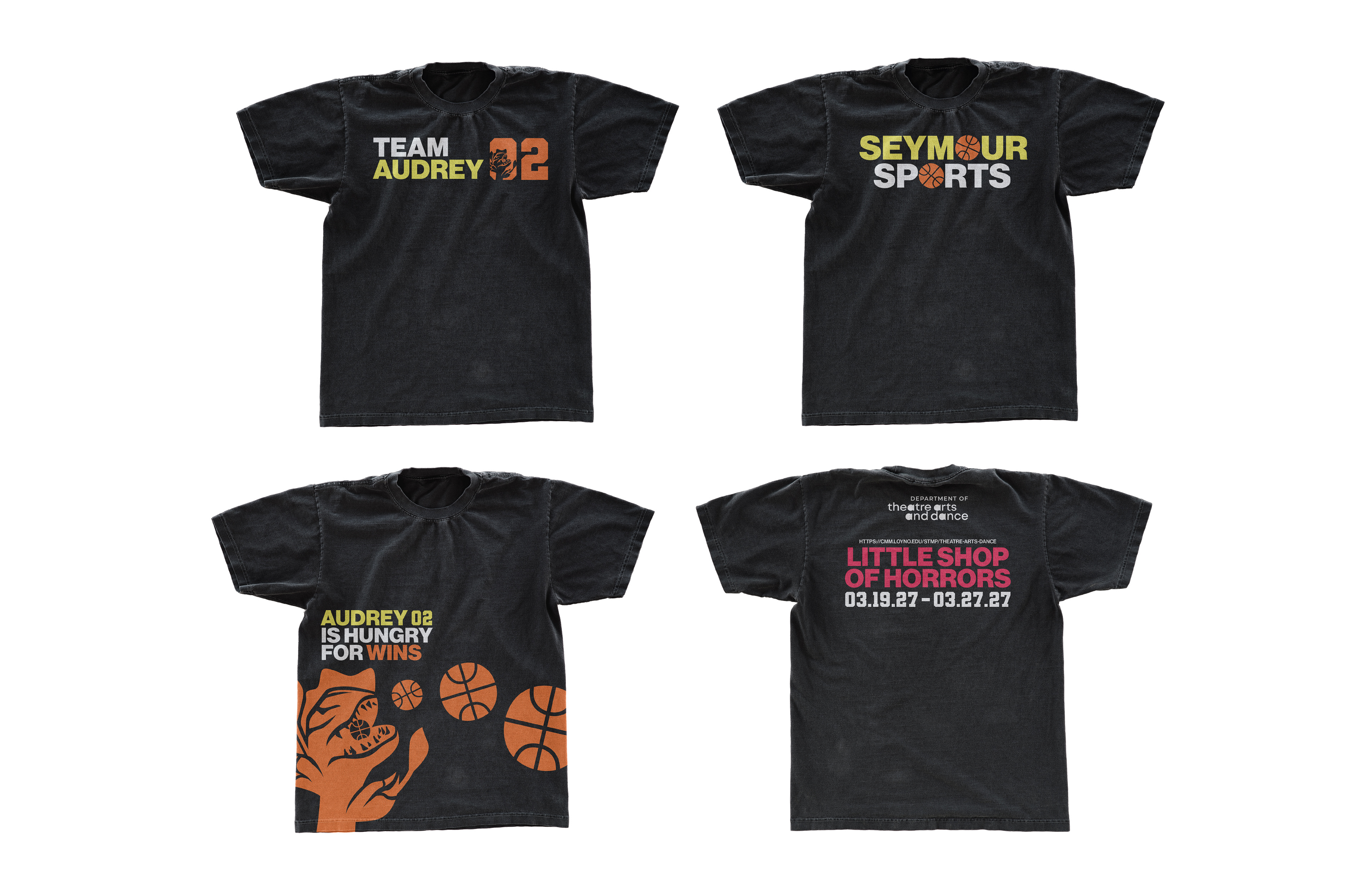
High-Fidelity Process: This production stage is finalization of the design language, settled on a brand theatre curated color palette, and solidified the grudge textures implemented with in the merch, poster, and motion materials and storyboards.
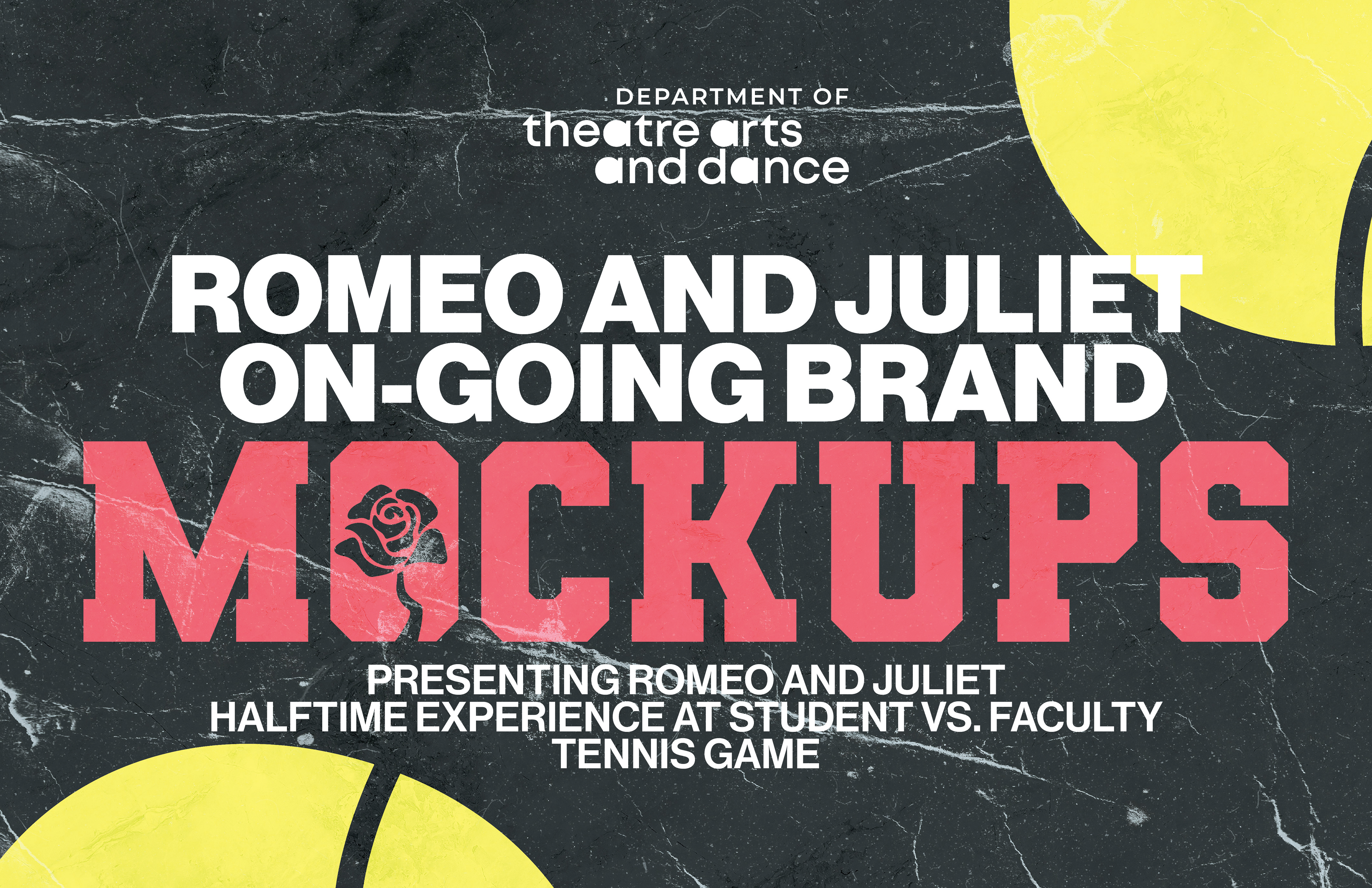
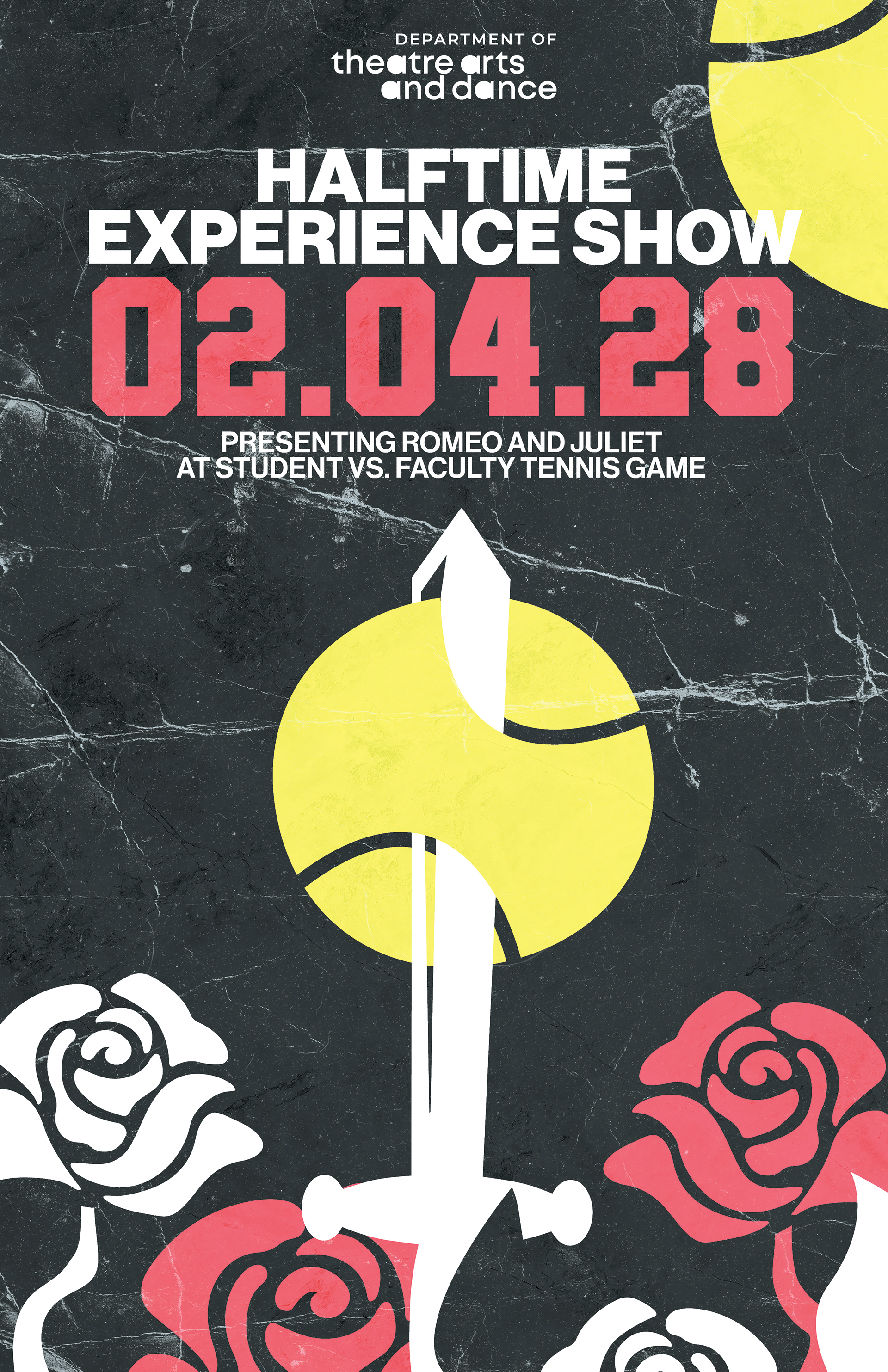
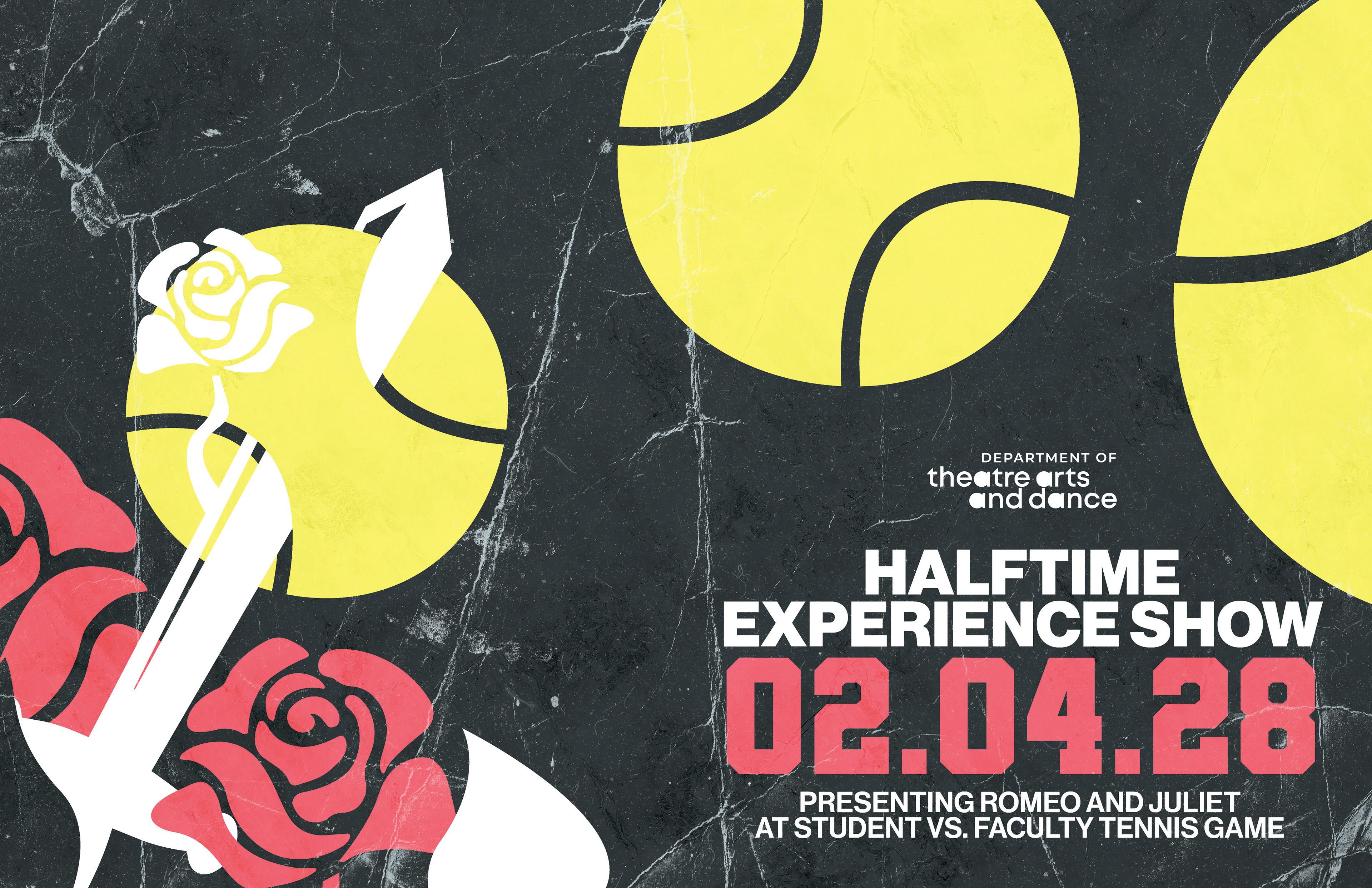
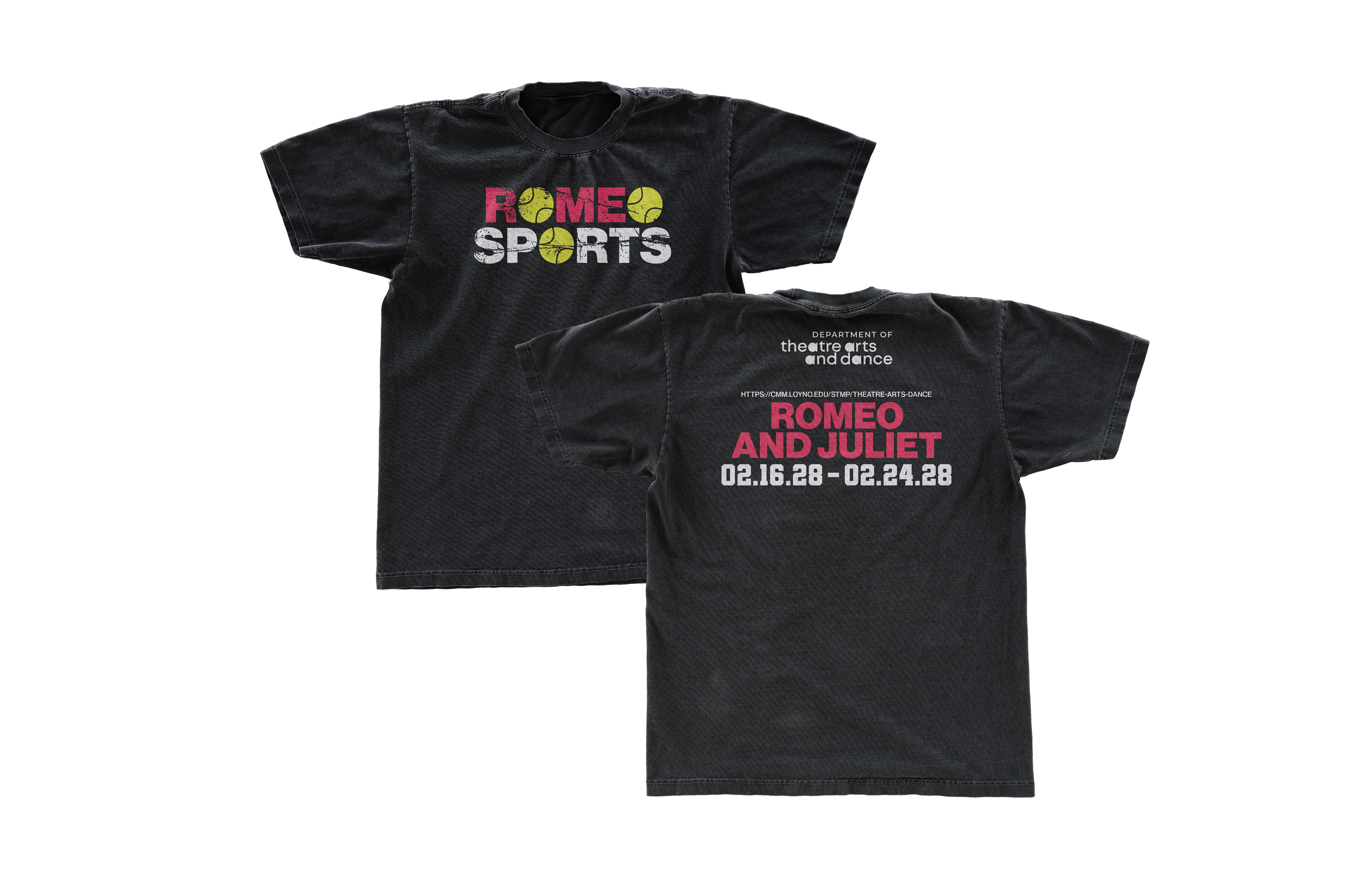
On-Going Brand Process: For this project, a defined set of brand guidelines ensures that theatre play promotions remain cohesive and relevant over time. Sports iconography is integrated alongside the typographic system, often by replacing the “O” characters with Neue Haas Grotesk letterforms, using standalone icons, or embedding them within custom graphic elements (maintained at 60–70% visibility). Each icon is intentionally selected to reflect the specific sport featured in the Homecoming Student vs. Faculty game, reinforcing clarity and thematic alignment. For instance, if Romeo and Juliet is presented during the 2028 Homecoming tennis game, only tennis-related iconography should be used to preserve visual consistency and maintain a clear connection between the sport and the theatrical promotion.